The Mi’kmaw actor’s directorial debut passed through years of screenplay revisions, fundraising and difficult production decisions before reaching Canadian film festivals in 2026.
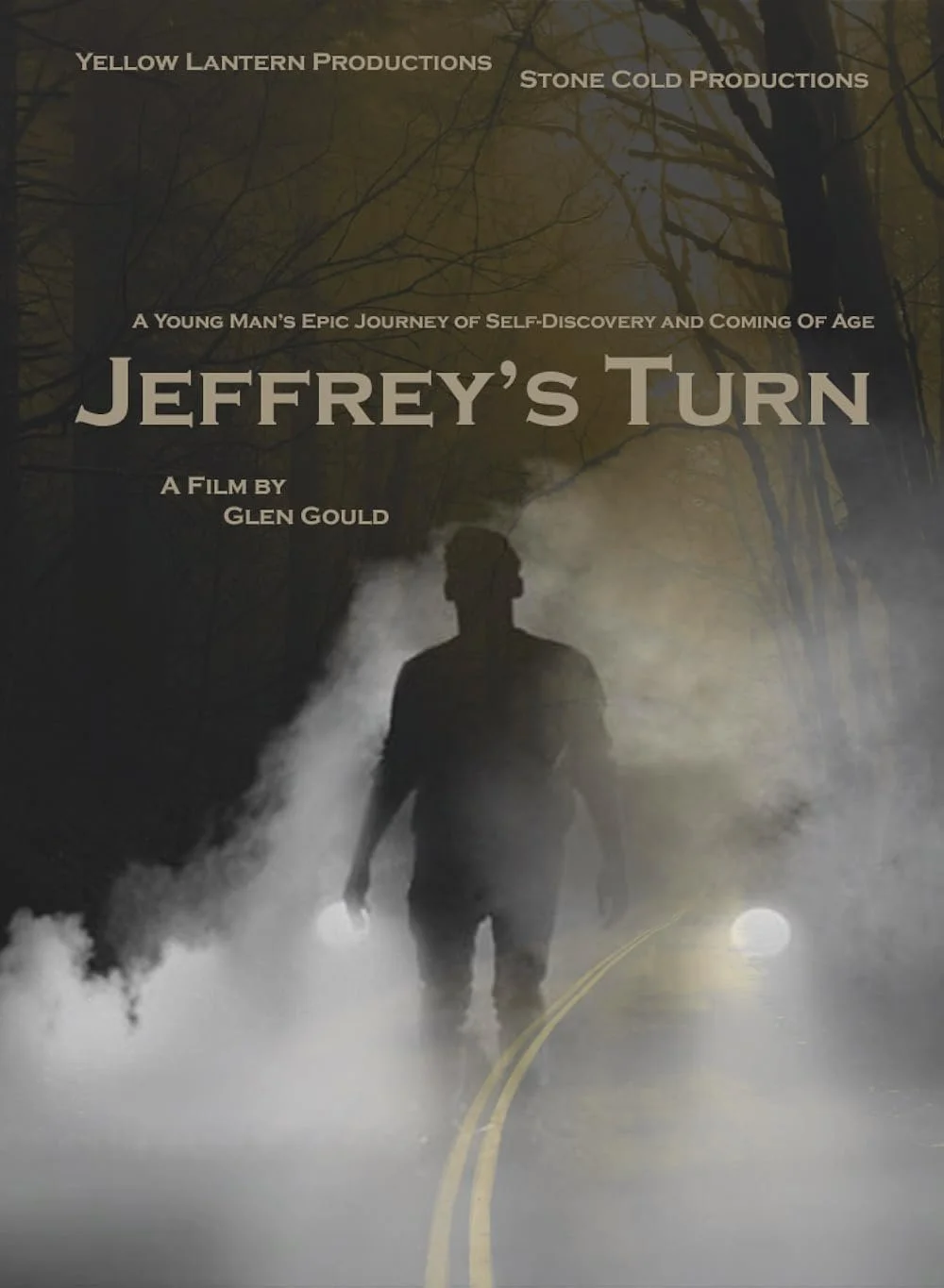
Poster for Jeffrey’s Turn, Glen Gould’s feature directorial debut, which premiered at the 2026 Atlantic International Film Festival.
When Jeffrey’s Turn premiered at the Atlantic International Film Festival on September 19, 2026, Glen Gould was presenting a film whose beginnings he traced to a conversation on another movie set in 2010. The Membertou First Nation actor had brought an idea to producer J. Hank White while working on Charlie Zone. Sixteen years later, Gould had written, directed, produced and starred in his first feature, with a screenplay credit shared by Joe LeClair.
The festival awarded Gould its David Renton Award for Outstanding Performance in Acting. He had received the same honour for Charlie Zone in 2011. Between those two awards lay a long process of script revisions, funding applications and changes to the proposed cast.
A script developed over years
White recalls encouraging Gould to write the idea down when they first worked together. In prepared written responses emailed on November 12, the producer describes helping a first-time screenwriter turn an initial story into a production Gould could direct.
According to a 2021 fundraising appeal organized by Gould and White, Stone Cold Productions optioned the project in 2014. That year, they reported receiving support through Telefilm Canada's feature-development program to work with story editor Jamie Gaetz on a second draft. Another period of Telefilm-supported development followed in 2015, with Ken Chubb working on a third draft.
The same account places a further rewrite in 2020, when the Harold Greenberg Fund supported a director's polish involving writer and script editor Joe LeClair. These were successive stages of screenplay development, years before the completed film appeared in a festival programme.
Gould and LeClair are both credited as writers of the completed film. White says Gould originated the characters and material, while LeClair helped refine the screenplay. White's priority, as he describes it, was retaining Gould's original perspective. “It was important that this remained Glen’s story,” he wrote.
The project changed along the way. A cast list attached to the 2021 fundraising campaign included performers and character names that differ from the finished film's credits. By the time it reached festivals, Gould was playing the uncle, Arty, opposite Zeegwon Shilling as his nephew JR.
The cost of reaching production
“Financing, without question, was the biggest challenge,” White wrote. He says Stone Cold covered Gould's writing fees and paid for script-editing work during development, while rewrites and delays continued without a secure route to production.
The filmmakers were still looking for resources in 2021. Their fundraising appeal sought money for a two-day teaser shoot in the Parry Sound area of Ontario, intended to strengthen applications for feature financing. The campaign described an $8,000 teaser budget and said some support had already been assembled. After years of screenplay work, the team still needed material to persuade potential backers.
White says support from the Indigenous Screen Office eventually allowed production to move forward. He identifies Richard MacQueen and Marty Williams as fellow producers and says Gould and the producing team reinvested their fees in the film. The completed film's FilmFreeway listing gives a production budget of $1.143 million.
White singles out production manager Doug Pettigrew for making the working budget manageable. Money also affected casting: Gould took the role of Arty because, according to White, the team could not afford to bring in a British Columbia actor originally wanted for the part.
A family story with a history behind it
The film follows JR Sylliboy, a 17-year-old living with his mother, Anna, in a fictional First Nation community in Cape Breton. He travels to Maine to meet his estranged uncle Arty, his late father's brother. Their journey brings them to the place known as Jeffrey's Turn and the circumstances of the father's death.
Gould has connected the premise to his own experiences while identifying the film as fiction. His published director's statement recalls family connections and difficult experiences from growing up in his community. He says elements of the story draw on events from his life.
In a September 30 interview with The Canadian Press, Gould identified a specific starting point: as a teenager, he travelled to Maine to help his uncle Donald Marshall Jr. return to Cape Breton. Marshall was wrongfully convicted of murder and spent 11 years and one month in custody before being released in July 1982. He was acquitted in 1983. Gould recounted their eventful trip, including a stolen car and being stranded at a motel, and said he later turned those memories into fiction.
Marshall's wrongful conviction became the subject of a public inquiry that documented serious failures in the criminal justice system, including racism. Gould told The Canadian Press he wanted the film to address continuing systemic racism. The screen story uses invented characters and circumstances; the relationship between JR and Arty is not a biography of Marshall.
White, who identifies as Mi'kmaq and Acadian, says he did not grow up in the community depicted in the film. He credits Gould's experiences in Membertou with informing its family relationships and everyday interactions.
Casting the film Gould wanted to direct
The confirmed principal cast includes Shilling as JR, Grace Dove as Anna, Gould as Arty and Brandon Oakes as Uncle Joe. Shilling is Anishinaabe from Wasauksing First Nation, according to his published artist biography, while Gould is Mi'kmaw from Membertou.
White says casting involved reaching out across communities because of the limited pool of Indigenous actors available locally. He describes established performers as a source of experience for Gould during his first feature as director, alongside younger cast members. Stone Cold Productions has also described a proposed Indigenous crew-training initiative for Jeffrey’s Turn.
Directing while acting proved difficult for reasons beyond the workload. Gould told The Canadian Press that he suffered a stroke during the shoot and spent a week in hospital afterward. He described continuing difficulties with mobility and concentration, adding a serious complication to the budget and development pressures described by White.
Festival recognition and the question of release
Jeffrey’s Turn had its world premiere at Atlantic International Film Festival on September 19. The festival announced Gould's David Renton acting award on September 21, using the full title David Renton Award for Outstanding Performance in Acting. The film received an Ontario premiere at Reelworld in Toronto on October 24, where it was presented as Gould's feature directorial debut. It screened again at the Silver Wave Film Festival in Fredericton on November 8.
The production lists Indiecan Entertainment as its distributor for Canada and the United States, with rights covering theatrical, video-on-demand and other forms of exhibition. Those rights do not establish an opening date or a streaming service. As of November 14, no general Canadian theatrical or home-viewing release date had been confirmed.