David Suzuki was telling his life through music decades before his NAC Playlist
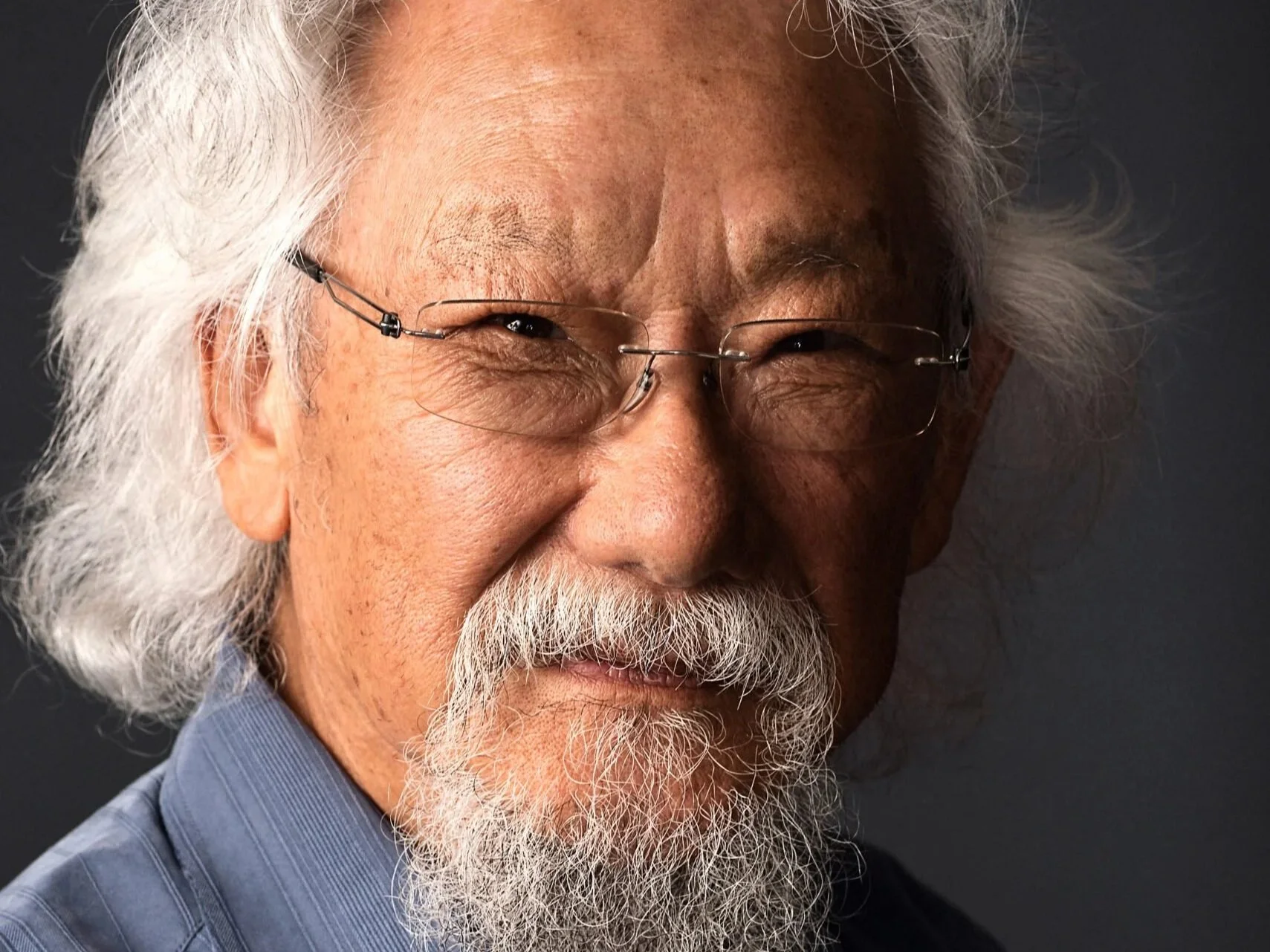
David Suzuki turned to Beethoven, Joni Mitchell, Gordon Lightfoot, John Lennon, Leonard Cohen and other music for David Suzuki’s Playlist at Ottawa’s National Arts Centre, revisiting artists and musical connections that stretch back decades in his life.
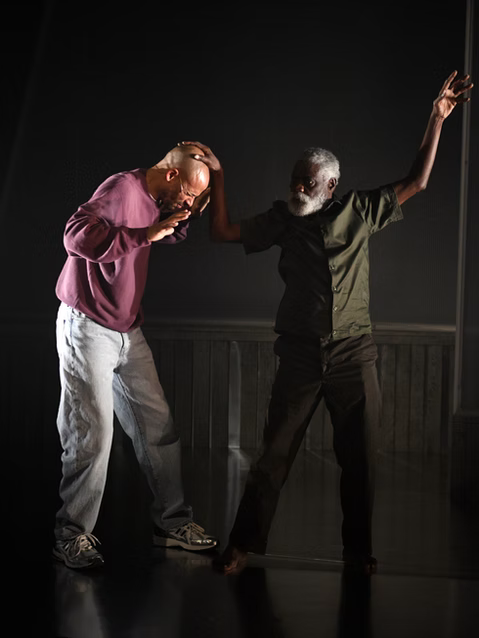
Photo credit: Jennifer Roessler / David Suzuki Foundation
When David Suzuki was asked to choose music for an Australian radio program in the 1990s, he started with Beethoven.
Classical music had arrived relatively late in his life. Suzuki recalled that his family had little money after the Second World War, when Japanese Canadians who had been incarcerated in British Columbia were prevented from simply returning to their former lives on the West Coast. Music in his childhood largely came through the radio. By the time he reached university, he suspected that people who claimed to enjoy classical music were being pretentious.
Then, in his third year, he took a music appreciation course and encountered Beethoven.
“A whole world opened up to me,” Suzuki told The Science Show in the interview, which was later rebroadcast by the Australian Broadcasting Corporation in 2014. His first musical selection was Beethoven’s Leonore Overture No. 2.
On Sept. 22, more than three decades after that interview, Beethoven appeared again in David Suzuki’s Playlist, the National Arts Centre Orchestra’s 90th-birthday presentation for Suzuki in association with Toronto’s Why Not Theatre.
The French-language NAC program notes updated on the day of the performance listed Beethoven’s Leonore Overture No. 3 alongside music by Joni Mitchell, Frederick Delius, Gordon Lightfoot, Canadian composer Carmen Braden, John Lennon and Leonard Cohen, as well as the traditional student song “Gaudeamus igitur.” The earlier interview does not explain why Suzuki chose Leonore No. 3 rather than the No. 2 he had selected years before, but it establishes Beethoven’s place in his own musical history: Suzuki had already tied the composer to the moment classical music entered his life.
The NAC described the 2026 program as music connected to Suzuki’s thinking, activism and sense of wonder. Its day-of credits also make clear that the project involved substantial theatrical work. The text was written by Suzuki, his wife and longtime collaborator Tara Cullis, and Why Not Theatre co-artistic directors Ravi Jain and Miriam Fernandes. Fernandes and Jain co-created and directed the text, while Suzuki performed and British-Canadian conductor Henry Kennedy led the NAC Orchestra.
That collaboration follows several years of work between Suzuki, Cullis and Why Not Theatre.
Jain and Fernandes previously worked with the couple on What You Won’t Do For Love, which received its world premiere at Toronto’s Luminato Festival in June 2022. Fernandes has described how the project began after Jain approached Suzuki about theatre work connected to the climate crisis. An early idea involved Suzuki playing Galileo, but Suzuki did not want to memorize a conventional dramatic role. Fernandes and Jain instead spent time with Suzuki and Cullis gathering stories and material that eventually became the production.
The Sept. 22 concert appears as the first date under Why Not Theatre’s fall North American tour schedule, although the company identifies David Suzuki’s Playlist separately as a special 90th-birthday presentation. Performances of What You Won’t Do For Love follow on the tour in New York, Montreal, Saskatoon, Toronto and several U.S. cities.
The credits for Playlist establish a new collaboration among the same four writers without publicly documenting exactly how each piece of music was chosen or how the memories attached to them were developed for the stage. Some of Suzuki’s musical associations, however, have been on the record for decades.
In that 1990s Australian interview, Suzuki moved from Beethoven to the Beatles’ “Lucy in the Sky with Diamonds.” He described himself at the time as a young geneticist with horn-rimmed glasses and a crew cut, working in a period of student unrest, opposition to the Vietnam War and major changes in his own life. His first marriage was breaking down, he said, while his work communicating science to the public was already underway.
A teaching opportunity took him to Berkeley in 1968, where he encountered the political and countercultural activity around Telegraph Avenue. Suzuki described the experience as a major disruption to the world he had known as a scientist.
John Lennon appeared again later in his selections. Suzuki chose “Beautiful Boy” and spoke about identifying with what he described as Lennon’s evolution into a “liberated male,” while also commenting on the affection Lennon expressed for his son.
The NAC program used a different Lennon song, “Imagine.” The earlier interview does not establish why Suzuki chose that particular song in 2026, but it documents a personal connection with Lennon’s music that long predates the concert.
The same distinction applies to Leonard Cohen. Suzuki’s NAC playlist ended with “Hallelujah,” in an arrangement by Chris LaRosa, while his earlier selection was Cohen’s “Democracy.” Suzuki said he had listened to Cohen for years and remembered putting Cohen records on deliberately during the collapse of his first marriage because the music connected with what he was experiencing.
That memory cannot simply be assigned to “Hallelujah,” but Cohen’s place in Suzuki’s musical life is documented in Suzuki’s own account.
Other choices from the old radio interview marked different periods. Suzuki selected Roberta Flack’s “The First Time Ever I Saw Your Face” while recalling meeting Cullis at a lecture in Ottawa on Dec. 10, 1971. He also chose Pachelbel’s Canon in D, which he said was played at their wedding the following year.
Suzuki later brought music directly into his environmental work. The David Suzuki Foundation’s Playlist for the Planet contest, supported by CBC Radio 3, received more than 600 submissions and more than 10,000 public votes, according to the Foundation’s 2009-10 annual report. A Canadian compilation followed in 2011.
Gordon Lightfoot’s “Ode to Big Blue” appeared on that release. Fifteen years later, it appeared again on Suzuki’s NAC program.
Neither the NAC, Why Not Theatre nor the Suzuki materials reviewed for this story state that the 2026 title was intended as a reference to the earlier Playlist for the Planet. The repeated Lightfoot selection nevertheless gives the two projects one documented point of overlap.
The program’s newly commissioned orchestral work came from Carmen Braden, a composer born in Whitehorse and raised in Yellowknife. Imaginal began as a piece for violinist James Ehnes and pianist Andrew Armstrong during Ehnes’s 50th-birthday recital tour. After its performance at the NAC in May, Braden was invited to create an orchestral version for Suzuki’s birthday concert.
That arrangement received its orchestral world premiere on Sept. 22 under Kennedy.
Braden built Imaginal around the biology of metamorphosis. In her program note, she describes imaginal cells as part of the process through which a caterpillar is reorganized into a butterfly, while the music repeatedly takes apart and reconstructs a central melody. She writes of “future potentials dormant inside us,” connecting the biological process to the possibility of change within an existing form.
Kennedy came to the project after recently completing a two-year appointment as the NAC Orchestra’s inaugural resident conductor. He is from New Glasgow, Nova Scotia, and much of his education and professional career has been based in the United Kingdom.
The Sept. 22 program required him to move between orchestral repertoire and arrangements of songs by Mitchell, Lightfoot, Lennon and Cohen, while Kellylee Evans provided vocals and the Ensembles vocaux De La Salle, University of Ottawa Choir and Ottawa Children’s Choir also took part.
The NAC materials reviewed for this story identify Suzuki as curator and do not credit Kennedy with selecting or sequencing the repertoire. They also do not explain what the Delius selection or “Gaudeamus igitur” represents in Suzuki’s life, or why “Imagine” and “Hallelujah” became the particular Lennon and Cohen songs used in 2026.
Beethoven requires less guesswork. Suzuki had already told that story himself years earlier: a university course, a composer he had barely understood before, and the discovery of an entire kind of music he had once dismissed. On Sept. 22, at 90, another Leonore overture was back on his playlist.