Tim Riedel's Red River Métis horror film explores inherited trauma, family responsibility and the frightening ways people can hurt those they love.
Spoiler warning: This review discusses significant plot developments, including the film's ending.
A story shared online describes a teacher who takes a student's water bottle to the front of a classroom. He first acknowledges that the bottle belongs to the student, invoking reconciliation as he explains the importance of recognizing their ownership. He then places it on his desk. When he asks what's wrong, the student says they want the bottle back. The teacher has delivered his acknowledgement without returning what he took.
It came to mind while watching Ancestral Beasts, the feature film from Red River Métis writer-director Tim Riedel that closed NorthwestFEARFest at Edmonton's Metro Cinema on October 18.
For more about the event, read Alberta Kills.
Throughout the film, a podcast called Stolen Matriarchs repeatedly begins with a land acknowledgement before moving into reflections on inherited trauma, personal responsibility and healing. The woman listening is Elyse Poitras (Morgan Holmstrom), whose own family has suffered across generations. As the story develops, those repeated introductions take on another significance, raising questions about the responsibilities that follow acknowledgement and the damage that remains when people fail to act.
The film opens with a woman sobbing over a photograph of three generations of women. A dark, claw-like hand emerges and begins cutting her wrist. Blood spills across the picture frame, and she frantically tries to wipe it away. It's a disturbing image, made stranger by her apparent concern for the photograph while she's being injured.
Four years later, we meet Elyse, whose anxiety and anger have brought her close to losing her job at a bar. Her older sister, Nikki (Darla Contois), intervenes when Elyse is confronted by her employer, demanding that she be given stress leave. Nikki's intentions appear protective, but the encounter quickly establishes the exhausting dynamic between them. She is perpetually coming to Elyse's rescue and just as perpetually reminding her of it.
Elyse decides to get away, retreating to the rural family home formerly occupied by her aunt Adèle (Gail Maurice). The neglected house offers a chance to regain some independence, although its isolated setting, unfamiliar noises and hole beneath the bedroom floor suggest that peace may be difficult to find.
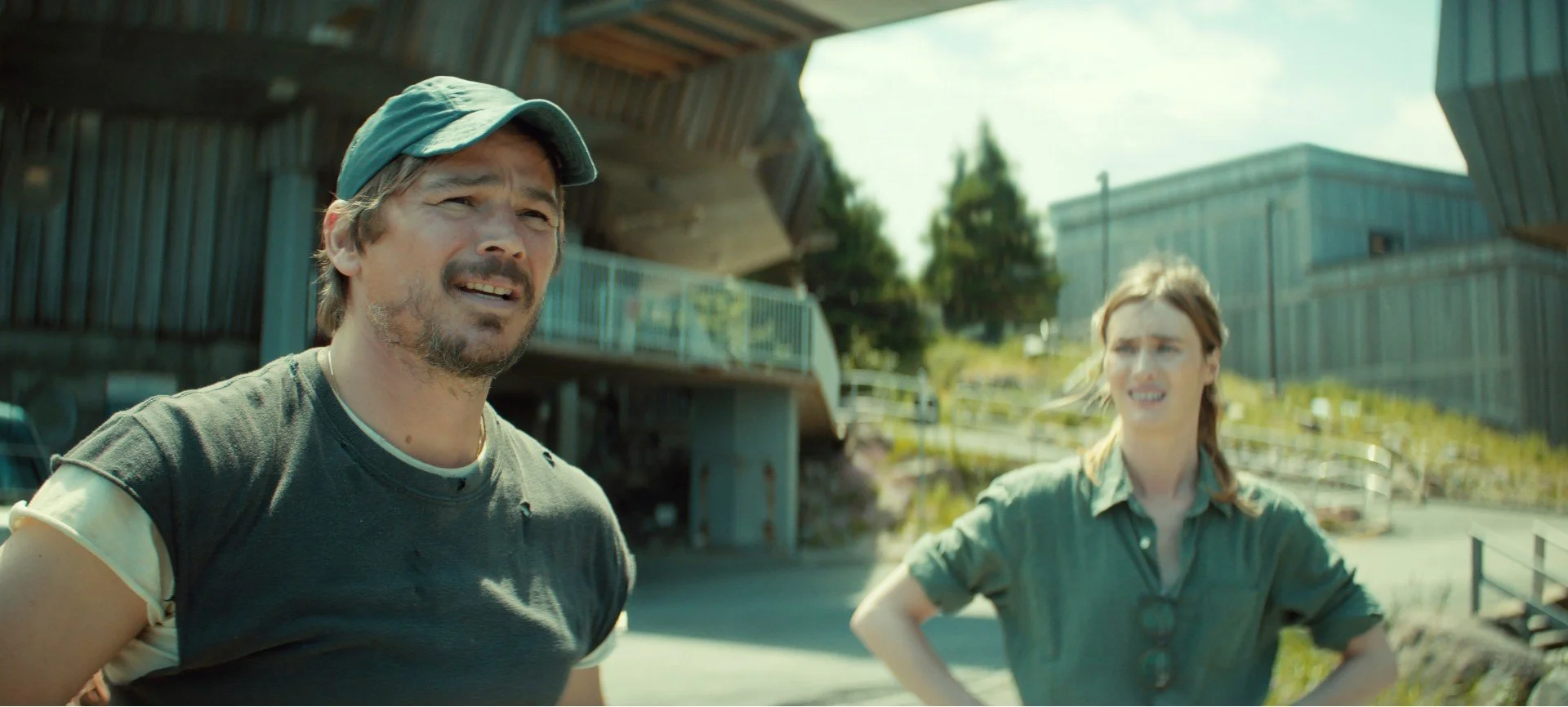
Her first encounter with the neighbour, Max (Josh Strait), is almost comically uncomfortable. He appears outside her car, challenges her right to be on the property and then insists that she accompany him to retrieve a key. When he tries to persuade her to enter his house for some moose meat, she refuses. She also photographs his truck and licence plate, sending Nikki a warning about whom to suspect if she ends up dead.
Elyse's practical responses are an appealing part of Holmstrom's performance. She may be overwhelmed by her emotions, but she's observant and capable of defending herself. As the disturbances inside the house escalate, she arms herself with a shovel, moves furniture against suspicious openings and improvises ways to escape danger.
Riedel makes good use of the house, allowing ordinary domestic spaces to become increasingly threatening. The hole beneath Elyse's bed is especially effective, offering glimpses of something that may be an animal, an intruder or something considerably worse. The house becomes almost another character, with its creaking structure, deteriorating rooms and concealed spaces gradually revealing the family's history.
The supernatural threat eventually emerges as a grotesque, many-jointed appendage that moves with the unsettling speed and dexterity of an insect. Its hand-like extremity can be unexpectedly gentle, even comforting, before becoming violently unpredictable.
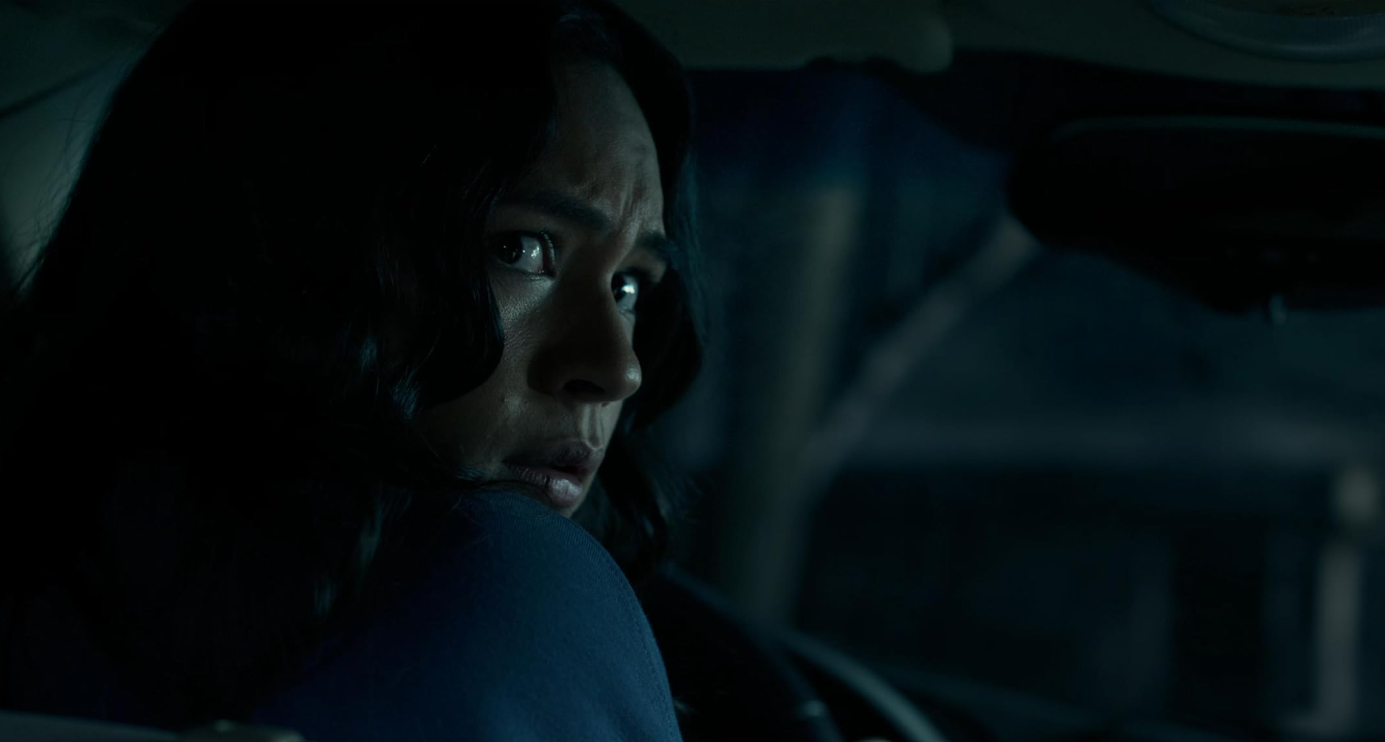
One particularly effective sequence sends Elyse fleeing to her car, where she struggles to keep the doors closed against an unseen attacker. The keys fall as she runs, and the creature seems clever enough to operate the fob: the trunk springs open while Elyse struggles to keep the doors locked. She threads a seatbelt through a door handle to keep it shut. The sequence makes excellent use of confined space and the familiar panic of being unable to keep something dangerous outside.
The film also disrupts Elyse's sense of reality through moments of visual distortion and temporal disorientation. At times, the image seems to tremble around her, almost as though she might split apart, while the progression of events becomes uncertain. The effect resembles derealization, the sense that familiar surroundings are unreal, while leaving open the possibility that something supernatural is happening. Holmstrom carries that uncertainty through her performance as Elyse grows increasingly frightened of her surroundings and her own reactions.
When Elyse visits a doctor to obtain documentation for stress leave, she explains that her mother was taken from her family as a child and placed in abusive foster homes. Her mother's subsequent struggles and death have left Elyse and Nikki dealing with experiences neither has fully understood or resolved.
Riedel has spoken about his own mother's experiences as a Sixties Scoop survivor and how his changing understanding of her life informed the film. The Sixties Scoop involved the widespread removal of Indigenous children from their families and communities, often placing them in non-Indigenous foster or adoptive homes. Although the film doesn't explicitly identify Elyse's mother's experience by that name, the history provides important context for its exploration of family separation and intergenerational trauma.
In an October 20 interview with Chevi Rabbit for Alberta Native News, Riedel described how learning more about his mother's experiences changed the way he understood her mental health and their relationship. His screenplay explores that complicated inheritance through the sisters, whose shared history has left them with very different ways of responding to pain.
The film is particularly observant about the administrative demands placed on someone already struggling with their mental health. Elyse needs medical documentation, insurance forms and assistance navigating a system that requires considerable organization and persistence. When her disability claim is rejected, the representative calmly explains the appeals procedure while Elyse becomes increasingly distressed.
Elyse is being asked to complete precisely the kind of demanding work that her present circumstances have made difficult. The representative's scripted responses offer little accommodation for the person on the other end of the call, and Elyse's frustration escalates until she loses control of the conversation. It's an uncomfortable but recognizable depiction of how overwhelming ordinary administrative tasks can become when someone is already struggling to function.
There are people willing to help. A cousin assists with the paperwork and brings groceries, while new acquaintances from the local gym offer to help repair the house. Cody (Asivak Koostachin), in particular, approaches Elyse with patience and kindness. When she tries to send him away, he tells her that everyone can go dark once in a while and that it's good to have someone there when it happens.
Yet accepting assistance is complicated by Elyse's fear of becoming dependent on others and her difficulty knowing whom to trust. The film also recognizes that people offering help have boundaries of their own, and that those boundaries can become difficult to maintain when someone is in distress.
Contois plays Nikki as a woman who has spent years assuming responsibility for her younger sister and has become deeply resentful of the role. Her concern is genuine, but she uses it to justify behaviour that ranges from controlling to outright abusive.
In one especially uncomfortable scene, Nikki traps Elyse beneath the house in an attempt to prove that her fears are irrational. She barricades the opening while Elyse begs to be released, treating her sister's terror as childishness and refusing to let her out until she has supposedly learned a lesson.
Whatever sympathy Nikki's history might invite, that scene makes her difficult to forgive. Contois is convincing in her portrayal of someone who understands her own behaviour as love and protection, even when it inflicts considerable harm. The performance also captures Nikki's fear of abandonment. Elyse's attempts to become independent seem to provoke her sister because Nikki has invested so much of her identity in being needed.
Their relationship is particularly difficult because both women have suffered, and neither knows how to escape the patterns established in their childhood. Nikki resents the responsibility she has carried, while Elyse resents being controlled. Their arguments move rapidly between accusations, pleas for understanding and attempts at reconciliation, with each sister capable of hurting the other in ways outsiders cannot.
The creature gives those emotional responses a physical presence. Riedel has described it as a protective mechanism that becomes dangerous when it can no longer distinguish a genuine threat from someone trying to help. Its shifting behaviour makes that idea frighteningly concrete, particularly when its attempts to protect Elyse place other people in danger.
The story also raises difficult questions about accountability. The sisters inherited suffering they did not choose, but their actions have consequences for themselves and the people around them. Riedel's treatment of Nikki is especially challenging because he gives viewers reasons to understand her behaviour while allowing its cruelty to remain visible.
As the film progresses, the Stolen Matriarchs podcast becomes increasingly significant. Its host speaks confidently about inherited trauma, confronting fear and taking responsibility for one's own healing. Those messages sometimes seem painfully inadequate beside Elyse's isolation, particularly when she is listening to advice about finding peace while struggling to survive another frightening encounter inside the house. The film eventually reveals that the podcast's host is her aunt Adèle.
In a final exchange staged as a podcast interview, Elyse has little patience for the reassuring words Adèle offers her listeners. She wants to know why her aunt left her and Nikki after their mother's death.
Adèle admits that she withdrew to protect herself and failed to consider what her absence would mean for the girls. Her explanation acknowledges the need for personal boundaries while recognizing the harm caused by leaving two grieving children without her support. The conversation also allows Elyse to reconsider her resentment toward her mother, whose suffering began long before her daughters were born.
In the water-bottle story, the teacher could have ended the lesson by returning what he took. Adèle cannot return the years she was absent or give Elyse back her mother. But she can stop talking about healing long enough to hear what Elyse needs.
Still bloodied from everything that has happened, Elyse asks Adèle to abandon the podcast performance and speak to her as her aunt.
The student wanted their water bottle back. Elyse wants her aunt.