
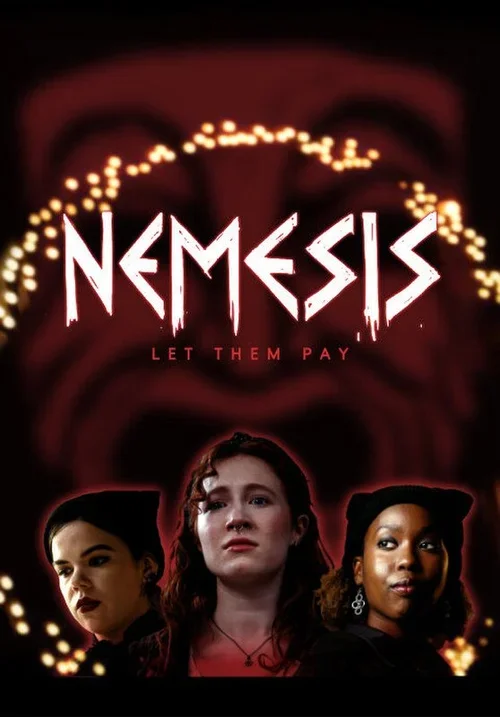
Caption: Sylvia Douglas’s Nemesis explores revenge and supernatural retribution following an assault on a high-school student.
Source: NorthwestFEARFest
Seven Alberta-made horror shorts screened under the title Alberta Kills at NorthwestFEARFest on October 18, with a program that moved from a two-minute comedy to a teenage revenge ritual and the nightmares of a young man caught in sleep paralysis. Metro Cinema’s Garneau Theatre hosted the screening, followed by a conversation with filmmakers Sylvia Douglas and Luke Cloarec.
The films ranged considerably in length and ambition. Some worked best through a single visual idea, while others had enough time to develop characters and make an argument. A couple left me uncertain about the details of their stories, even as their images held my attention.
Comedy, old technology and a handcrafted vampire
Social Justice Warrior wastes little of its two-minute runtime. Directed by Dylan Wertz, Daniel Ennett and Frederick Kroetsch, it follows a wheelchair-using vigilante who responds to patronizing and bigoted behaviour by firing arrows at the offenders. The suction-cup-like weapons turn the violence into an exaggerated joke, and the character’s evident resourcefulness makes the assumptions people make about his disability look especially ridiculous. His departure into a desert landscape, complete with a blurred licence plate, gives the final gag an extra beat.
Wertz has worked on Corner Gas, including its animated incarnation, and shared a 2009 Leo Award for writing with Norm Hiscock. Social Justice Warrior has the quick construction of a comedy sketch: it establishes the premise, pushes it to an absurd conclusion and gets out before the joke becomes repetitive. Its humour works because the vigilante is in command of the situation from the start.
Morgan Ermter’s seven-minute Never Seen trades the jokes for disorientation. Two young women enter an apparently abandoned house, despite one friend’s reluctance, and discover an old computer with a screen that becomes disturbingly bright. A digital camera, already outdated-looking, connects their experience to a second pair who later arrive looking for their friends. As the house refuses to let its visitors leave, the familiar devices become part of something much less familiar.
The filming is effective, especially the contrast between ordinary-looking technology and the increasingly strange behaviour inside the house. The film has the unsettling feel of a psychological thriller, although its successive disappearances and shifts in what seems real left me with the disoriented feeling of what happened more than the understanding of what happened.
Douglas Cook’s Before the Sun uses puppetry and handcrafted settings for a five-minute encounter with a 200-year-old vampire’s past. The textures of the figures and sets are fascinating to watch, and the film encouraged me to think about how Cook achieved particular effects. The recurring crackle of fire contributes as much to its atmosphere as the lighting and shadow play.
A final play of flames and silhouette is especially striking. Before the Sun won Best Animated Short in Studio A(lberta) at the 2026 Edmonton International Film Festival and received six nominations for the 2026 Rosie Awards.
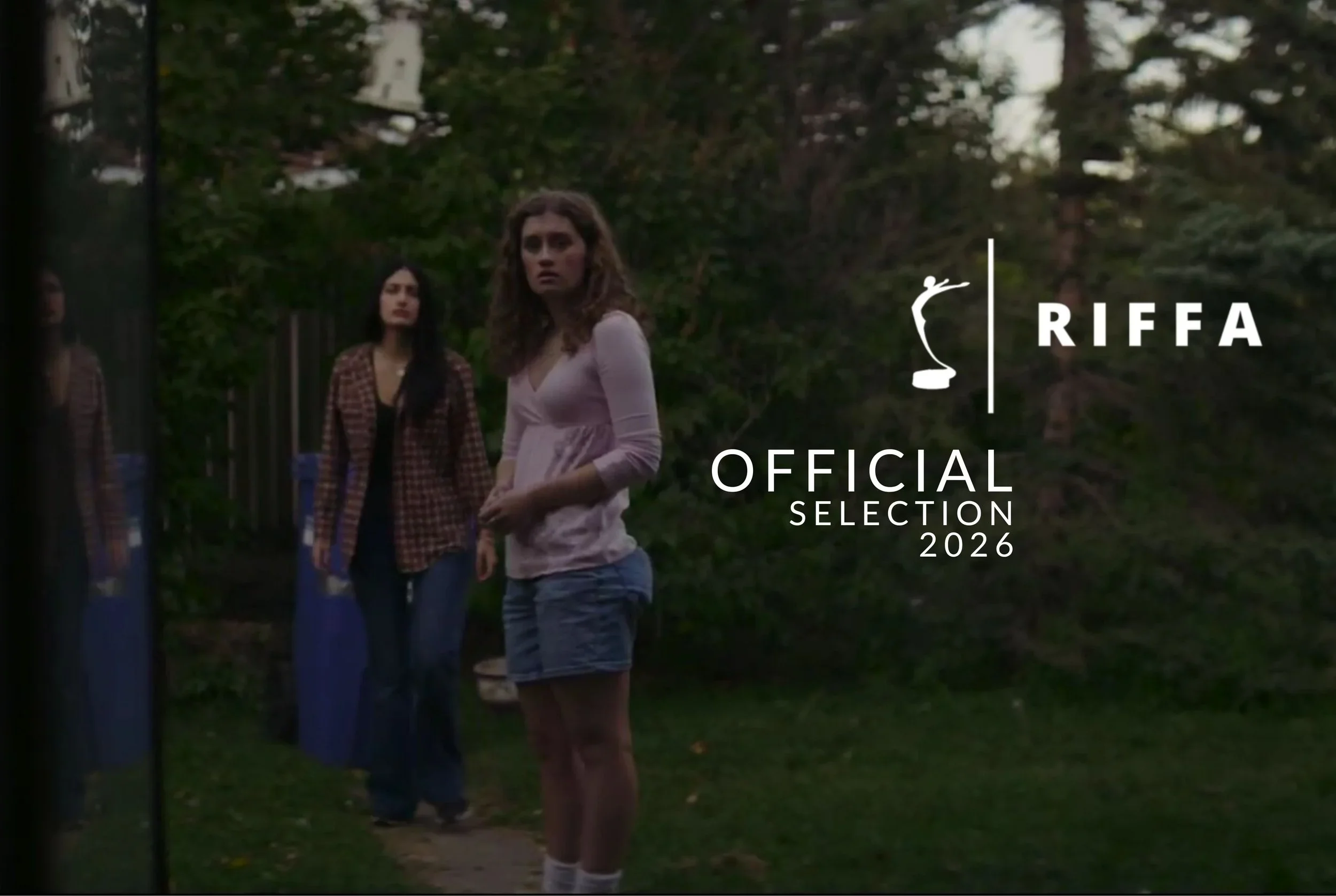
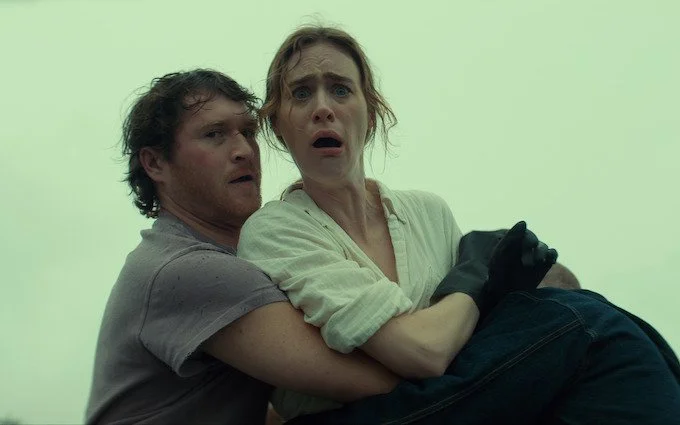
Two young women in Morgan Ermter’s Never Seen, a Calgary-produced horror short screened at NorthwestFEARFest.
Credit: LHI Productions / Numera Films
Nemesis and the uses of anger
Sylvia Douglas’s 19-minute Nemesis has more room to establish its characters and the circumstances that lead them toward revenge. After a high-school student is assaulted and publicly humiliated, two classmates turn to an occult ritual, calling on the ancient goddess of retribution. Tarot cards showing the Tower, Justice and Death, along with the appearance of a raven, signal what is coming. Elsewhere, the assaulted student retreats to a music practice room, where her screams are silenced.
The film reminded me of The Craft, particularly in the young women’s makeup and their attraction to a power that promises an answer to humiliation. Douglas has discussed female-led supernatural horror from the late 1990s and early 2000s as an influence, so the resemblance is likely no accident and a welcome callback. Yet Nemesis finds its own humour in a very contemporary goddess, including the use of a selfie amid her violent work.
I liked the camera work, especially the changing angles and movement around the girls as they prepare their ritual. Those choices make the sequence feel active rather than staged. The film gives the girls’ anger a clear source. It also raises a difficult question about what happens when a desire for accountability becomes an invitation for someone—or something—else to punish.
Writer Andrew Foley developed Nemesis as a feature screenplay in 2018, when the #MeToo movement was prompting hopes of lasting change. Douglas later directed the short as a proof of concept, with filming at Edmonton’s Orange Hub; the story has also been considered for episodic development. During the post-screening Q&A, Douglas discussed the anger behind the material and the frustration of watching sexual violence and institutional failures continue despite that earlier optimism.
Douglas said the origins of the story were in a time of empowerment when #MeToo was calling for action but now we are living in the time of “Cornell 57” and the contrast is feels stark. Cornell 57 is a term used to represent the 57 fraternity members who received a text about a sexual assault happening at a party at Cornell University but did not help. Douglas cited the case while discussing her frustration with continuing sexual violence allegations and institutional responses to them.
Douglas spoke, too, about horror as a means of expressing difficult emotions and about what happens when an audience watches something frightening together and can talk afterward. That was a useful way to understand her attraction to this story. Nemesis takes feelings of humiliation, helplessness and rage seriously, while allowing the fantasy of supernatural retribution to become frightening in its own right.
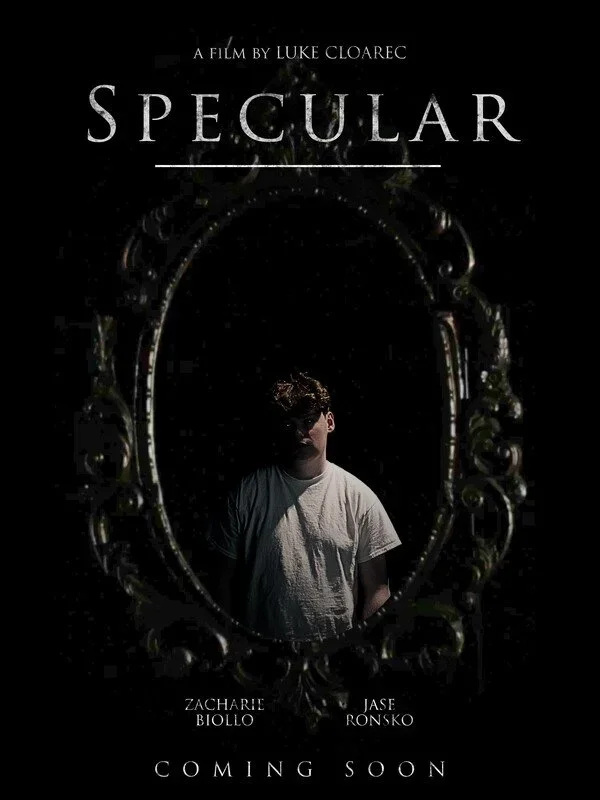
Luke Cloarec’s Specular follows a young man whose guided sleep meditation takes a sinister turn.
Source: NorthwestFEARFest
Luke Cloarec’s three uneasy worlds
The final three shorts came from Luke Cloarec, a Red Deer Polytechnic film-production student whose work moves between nearly wordless psychological horror and larger stories with more characters. His 2025 short Specular won the Fil Fraser Best Student Production award at that year’s Rosie Awards. The three films here shared an interest in people trying, unsuccessfully, to escape.
Menagerie begins with Caden watching an old black-and-white cartoon. He gets up from his armchair and attempts to leave, only to find himself back in front of the television. Repeated trips into the hallway bring a warning whisper, an unsettling woman peering around a corner and a hospital room where Caden tries to speak to people who do not seem to perceive him. Each route promises some explanation or exit, then deposits him back where he started.
Cloarec changes the visual perspective as Caden grows increasingly desperate. At times the camera resembles surveillance footage; elsewhere the image deteriorates or the orientation shifts, making ordinary corridors difficult to trust. The repetition can be confusing, particularly when new figures appear without explanation, but the attention to camera position is inventive. The film’s eventual expansion beyond Caden’s room makes the confinement feel even more unsettling.
The Black Square takes place in a suburb where an inexplicable black object has appeared in the street. Residents observe a curfew, argue over what the object might be and treat anyone who questions the rules with suspicion. Paul, a grieving father, speaks with a younger neighbour, Liam, who imagines the square could be a passage to a place where he can escape the fighting at home. Liam disappears, and the neighbours quickly decide Paul must have harmed him.
The neighbours’ hostility is sometimes drawn broadly, but their willingness to declare Paul guilty without evidence gives the short its real menace. Flashbacks to Paul’s earlier life add context to his isolation, and the story plays effectively on how quickly fear can become an excuse for collective cruelty. The black square remains mysterious while the behaviour around it is easier to recognize.
Specular takes place largely in a bedroom. Dylan has spent the day staring at a television as people move through the house around him. Unable to sleep, he finds a guided meditation on his phone. The recording’s reassuring instructions grow disturbing as it tells him to accept another presence in the room and explains that he may be unable to move.
A tall dark figure wearing a white mask appears, and its abrupt sideways turn of the head produced the biggest collective jump of the screening. The film then moves into an out-of-body encounter and a particularly disturbing sequence involving a mirror. The premise of a sinister sleep recording is familiar enough, but Cloarec handles the timing of the figure’s appearance well. His use of what can be seen just beyond the bedroom door makes a small space feel threatening.
At the Q&A, Cloarec said Specular was closer to his usual work with one character and little dialogue. Menagerie and The Black Square, which he said were filmed within about a week of each other, required different approaches, particularly as the latter involved more dialogue and an ensemble cast. The Black Square and Menagerie also received 2026 Rosie Award nominations in student-production categories.
A screening with room to experiment
The seven films were consistently interesting to watch whether through Cook’s puppetry, Douglas’s shifting camera angles or Cloarec’s repeated attempts to turn ordinary rooms and hallways into traps. Social Justice Warrior offered a welcome burst of comedy amid the more unsettling material, while Never Seen made an old computer and camera seem newly ominous.
The conversation afterward helped put faces and working methods to the films. Douglas spoke about horror’s capacity to accommodate anger and about the value of discussing disturbing work together while Cloarec described testing different ways of making short films. The Q&A was an engaging part of the Alberta Kills program.

Ontario alternative pop-rock duo Little White Lies released “String Me Along” on October 2, a song that Katie Rose Campbell says grew out of a difficult U.S. tour and a change in how the band approaches its career