When Second City Television premiered on Global on September 21, 1976, its comedians were playing the people who owned, operated and appeared on an imaginary television station. Their programs came from Melonville, a fictional town where the local broadcaster had an ambitious schedule and very little money. Over the next eight years, the series itself would change broadcasters, production cities, running times and cast members as it reached audiences across Canada and the United States.
Fifty years after its debut, SCTV is often remembered through the later careers of John Candy, Catherine O’Hara, Eugene Levy, Andrea Martin, Rick Moranis, Martin Short and their colleagues. The program’s development offers another way to understand its influence. Its satire of television grew out of a Toronto comedy company, survived a move to Edmonton through a CBC production arrangement, and expanded into an American network series before finishing on pay television.
The full run also received a new Canadian release in 2026. In February, The Second City and Prime Video announced that six seasons comprising 135 episodes would become available to Canadian subscribers on March 3, bringing together material from the series’ different broadcast eras.
From Toronto’s Old Firehall to Global Television
The Second City established its permanent Toronto home at the Old Firehall on Lombard Street in 1973. Bernard Sahlins and Andrew Alexander developed the television project from the Toronto company, which drew on performers and writers with roots in both Canadian and American improvisational theatre. The original seven television regulars were Candy, Joe Flaherty, Levy, Martin, O’Hara, Harold Ramis and Dave Thomas.
Ramis, a veteran of the Chicago Second City company, was the first head writer. Milad Bessada directed the initial series, with George Bloomfield subsequently taking over directing duties. Sheldon Patinkin contributed as a writer and producer, while Alexander remained one of the central figures behind the production. Their experience in live revue was adapted for a medium in which performers could return as the same fictional television personalities from episode to episode.
The series presented the output of SCTV, a small independent television station. Viewers might see news, commercials, a movie presentation, a talk show or a game show, with the station’s personnel appearing between segments. The arrangement allowed sketches to be connected by the habits and financial problems of the broadcaster itself. The network’s low-budget programs could be interrupted by an advertisement, a transmission problem or interference from management.
Flaherty portrayed the station’s owner, Guy Caballero, and appeared as horror host Count Floyd and talk-show presenter Sammy Maudlin. Levy played newscaster Earl Camembert and entertainer Bobby Bittman. Martin became closely identified with leopard-print-clad station executive Edith Prickley, while O’Hara’s characters included performer Lola Heatherton. Candy played Johnny LaRue, a television personality with grand ambitions, and Thomas appeared as the caustic critic Bill Needle.
These characters gave the cast an ongoing fictional institution to work inside. In a University of Alberta essay published in November 2025, film-studies lecturer Neale Barnholden describes a sketch in which a detergent sponsor pressures the station and Bill Needle discovers how quickly his principles can be compromised. The sequence uses a television advertiser, rather than the advertised product alone, as the target of the joke.
Global initially commissioned six episodes, broadcast as part of the program’s first 1976–77 run. The show continued through further Toronto-produced half-hours in 1977–78 and 1978–79. American stations began carrying syndicated versions in 1977, edited and scheduled differently from the original Global broadcasts. These variations would eventually make the series’ episode history more complicated than a single set of season numbers suggests.
The Edmonton years
Global did not continue producing the series, but SCTV returned in 1980 through an arrangement involving CBC and Edmonton broadcaster Charles Allard’s ITV operation. Its studios became the program’s production base, and CBC aired a new run of half-hour episodes. John Blanchard directed the revived show, with Flaherty and Thomas serving as head writers.
The ensemble also changed. Flaherty and Thomas returned, Levy and Martin appeared part-time, and Robin Duke, Tony Rosato and Rick Moranis joined the regular cast. Candy and O’Hara were absent as regulars during this CBC cycle. Moranis therefore belongs to the Edmonton chapter of SCTV, rather than its seven-person original television ensemble. Short would arrive during the later NBC years.
The studio was located at what is now 5345 Allard Way in Edmonton. Barnholden documents 44 episodes filmed at ITV during 1980 and 1981, along with material shot elsewhere in the city and nearby communities. The locations became part of sketches that generally continued to present themselves as programs from Melonville.
One sketch, “Dr. Shekter,” brought the performers to the University of Alberta’s North Campus. Levy played a man praising his back doctor, portrayed by Moranis, in a parody of television soft-drink advertising. The exterior of Corbett Hall stood in for a medical setting. Another production, “Polynesiantown,” used the area around Edmonton’s former Strathcona railway station. The sketches preserve recognizable local streets and buildings within a show whose fictional station rarely acknowledged Edmonton at all.
Edmonton was consequently more than a temporary production address. Its facilities enabled the 1980 revival, while the CBC arrangement produced one of SCTV’s most durable creations.
Why Bob and Doug McKenzie appeared
The “Great White North” segments were developed after CBC wanted material that would be identifiable as Canadian. Moranis and Thomas responded with Bob and Doug McKenzie, two brothers wearing tuques and winter clothes who sat together discussing beer, everyday frustrations and whatever else came to mind.
Thomas played Doug and Moranis played Bob. Their loose conversations contrasted with the elaborate commercial spoofs and Hollywood parodies elsewhere on SCTV. Barnholden describes how the two performers improvised short exchanges at the Edmonton studio, with the results incorporated into the television program.
The joke reflected both familiar Canadian stereotypes and the broadcaster’s desire to see those stereotypes represented on screen. It quickly found an audience beyond CBC. Bob and Doug appeared on NBC, released a comedy album and became the protagonists of the 1983 film Strange Brew. Their success also underscores how much SCTV changed after 1976: neither brother was part of the show’s original run, and both came out of a specific Canadian programming arrangement.
NBC brings SCTV to a larger audience
NBC began broadcasting SCTV Network 90 in May 1981. The American network version ran 90 minutes, while CBC carried shorter, hour-long adaptations of the NBC-era material. Production initially continued in Edmonton before moving back to the Toronto area in 1982.
Candy and O’Hara returned to the regular cast, joining Flaherty, Levy, Martin, Moranis and Thomas. During the 1981–82 NBC cycle, Short began appearing, bringing characters including Ed Grimley into the SCTV repertoire. Later network cycles featured a different regular lineup as cast members departed or reduced their involvement. John Hemphill and Mary Charlotte Wilcox became featured performers, and both participated in the show’s later years.
The expanded broadcasts gave the fictional station more room for recurring plots and parodies of entire television genres. The program could move among its own talk shows, news broadcasts and movie presentations while revisiting the characters who supposedly made them. Its satire also continued to address the practical business of broadcasting: the demands of advertisers, the interests of management and the sometimes dubious quality of the material that television stations fill their schedules with.
SCTV’s recognition at the Emmy Awards came during this American network period. The Television Academy records 15 nominations and two wins for SCTV Network, both for outstanding writing in a variety or music program. The first came in 1982, when the credited winning team included Moranis, O’Hara and Thomas alongside Candy, Flaherty, Levy, Martin and numerous other writers. The 1983 winning team included Short and Wilcox, along with writers such as Dick Blasucci, Bob Dolman, Paul Flaherty, John McAndrew, Michael Short and Doug Steckler. The two awards reflected the work of changing, collaborative writing groups rather than a single fixed cast.
The final cable season and a complicated archive
After NBC ended its run, SCTV returned in a shorter 45-minute version titled SCTV Channel. It appeared on Cinemax in the United States and Superchannel in Canada during 1983–84. Flaherty, Levy, Martin and Short formed the principal cast of this final cycle, supported by featured performers and occasional appearances from former colleagues. The last original episode aired in July 1984.
The series’ various outlets left different records of its history. Global and the first CBC revival used half-hour episodes; NBC expanded the American format to 90 minutes, while CBC broadcast hour-long versions of that material. The last cable series had its own 45-minute format. Syndicated edits, reruns and later releases also differed from the original broadcasts, which helps explain why published episode totals and season divisions are not always identical.
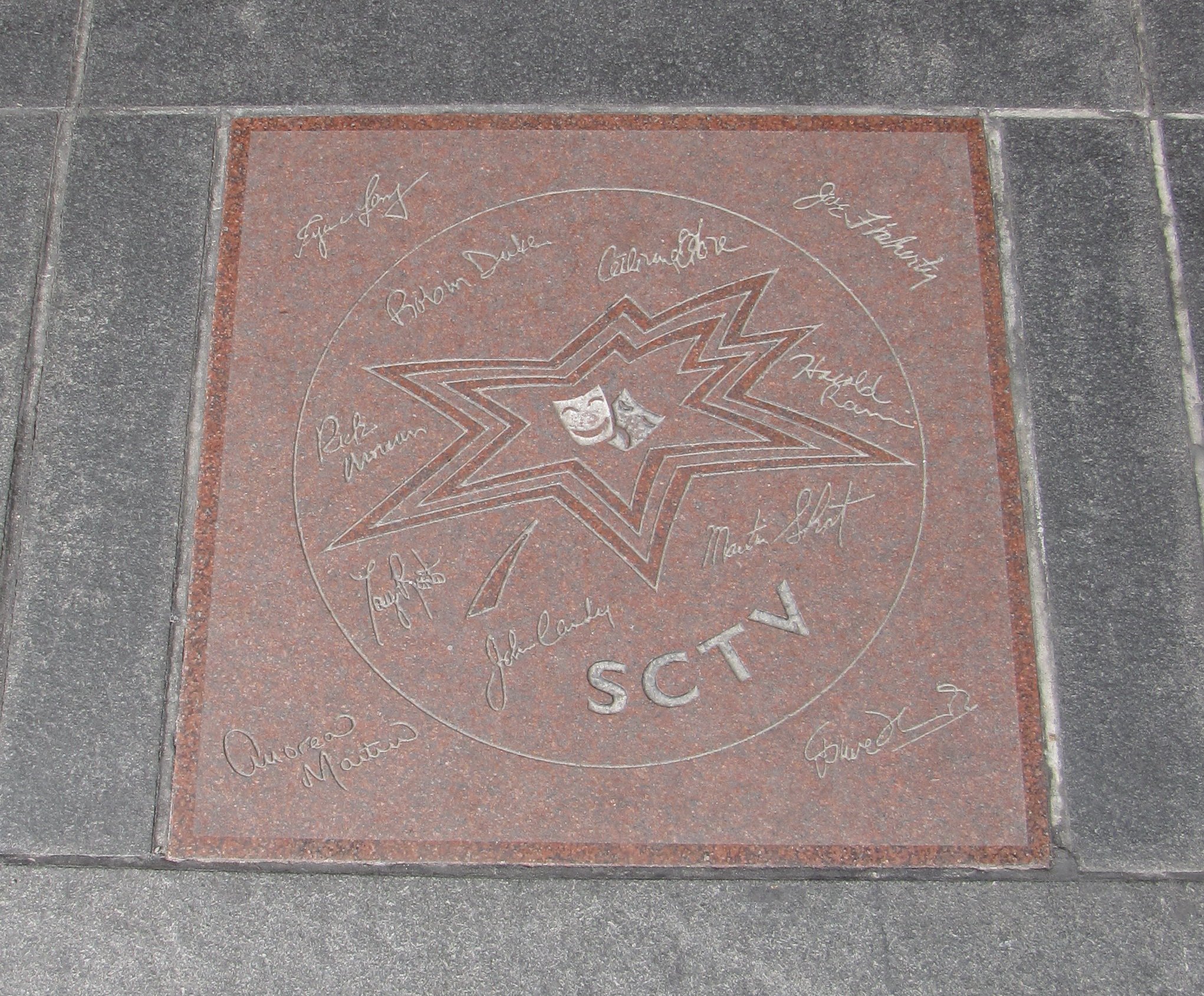
SCTV was inducted into Canada’s Walk of Fame in 2002, long after its original programs had become difficult to obtain as a complete collection. The use of popular music in sketches complicated later home-video distribution. Barnholden noted in his 2025 essay that DVD releases had covered only part of the series, at a time when a complete streaming release was still unavailable.
The February 2026 announcement by The Second City and Prime Video changed that access picture. The companies said the six-season, 135-episode collection would arrive in Canada on March 3. Its episode count describes the streaming catalogue, not a simple total of the half-hour, hour-long, 90-minute and cable broadcasts as they originally aired.
Across those formats, the station in Melonville remained the program’s central invention. It made room for the characters and performances that audiences remember, while the actual television series depended on changing Canadian production arrangements and opportunities in the American market. SCTV’s history can be followed through those decisions as clearly as through the performers whose work made the fictional station worth watching.