OSAC tests youth board role as Saskatchewan arts councils plan for succession
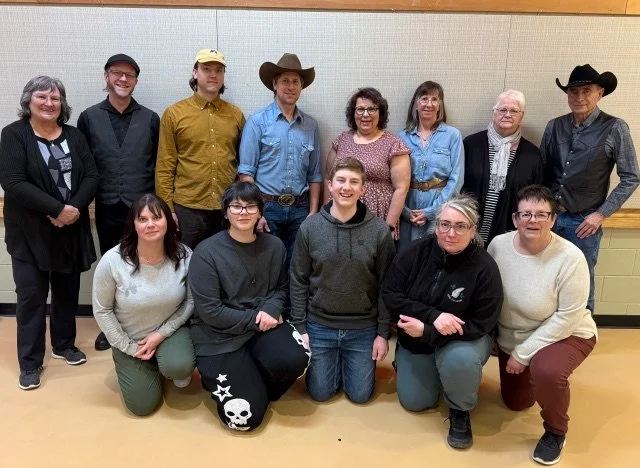
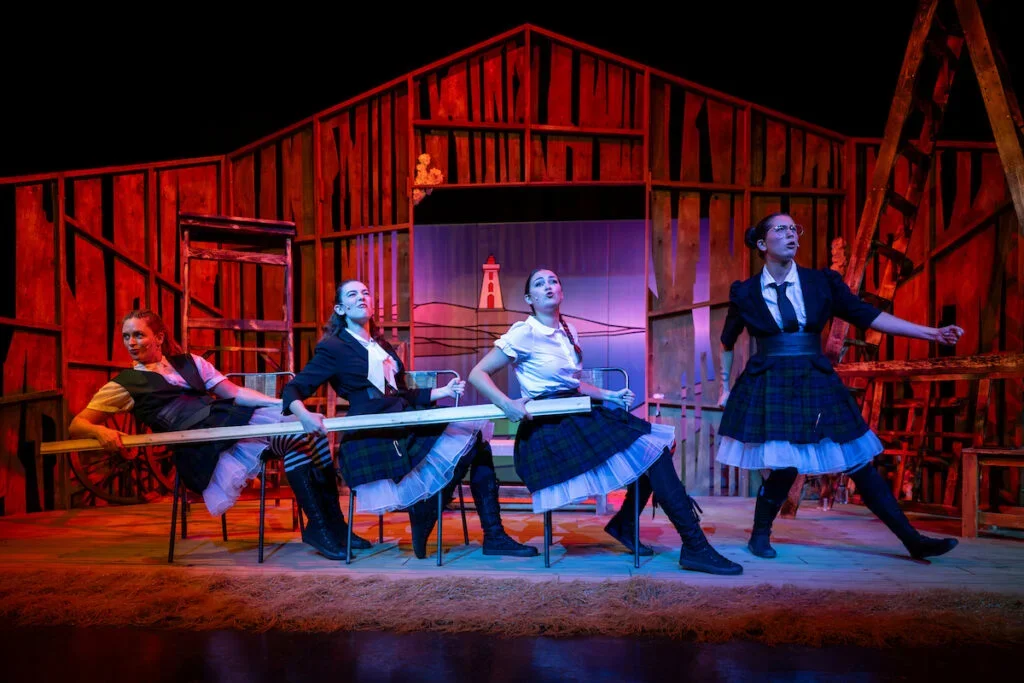
Logan Duchscherer, front centre, with The Wardens and members of the Leader & District Arts Council in 2025. Duchscherer has been named for OSAC’s new one-year Spark/Inspire/Youth Representative position.
Photo credit: Organization of Saskatchewan Arts Councils (OSAC)
When the Organization of Saskatchewan Arts Councils holds its annual general meeting in Saskatoon on Oct. 17, its board-election agenda will include a new one-year youth representative position.
OSAC has named Logan Duchscherer of the Leader & District Arts Council for the Spark/Inspire/Youth Representative role. The position is non-voting, and OSAC says the year will not count against Duchscherer’s eligibility if he later seeks a regular board position. Its AGM material describes the role as a test and says the organization is open to inviting other Spark or Inspire mentees in future years, but the published material does not say the position will become permanent.
The AGM takes place during OSAC Showcase, the organization’s Oct. 16–18 gathering of arts councils, artists and agents. The weekend is part of the process through which local presenters consider performers for future Saskatchewan tours, and OSAC is offering a youth bursary that covers half of the $220 Showcase registration fee for an eligible youth arts-council member or Spark or Inspire coordinator.
OSAC’s published Spark guidance has encouraged coordinators to attend Showcase with their local arts council and participate in selecting the artist they will present the following season. Spark itself was developed after member arts councils repeatedly identified youth engagement and succession planning as concerns. A younger participant works with an experienced Performing Arts Coordinator and takes responsibility for planning and presenting one performance, while the mentor is expected to guide rather than take over the project. OSAC can cover up to half of the artist fee, to a maximum of $1,000, subject to available funding.
Its Inspire program applies a similar approach to visual and media arts. Current program material says Inspire was also created in response to youth-engagement and succession concerns, with the Inspire Coordinator expected to develop and lead programming while working with an experienced mentor. Both programs put younger participants into decisions about what is presented and how the work reaches the community.
Those succession concerns sit within a network built around local volunteer organizations. OSAC’s bylaws define its full-member arts councils as groups of volunteers whose purpose is to promote the arts in their communities. The organization says its programs reach more than 80 Saskatchewan towns and cities through arts councils and schools, while its 2025–26 community performing-arts season included 156 performances by 37 artists in 35 communities.
Duchscherer has already moved from youth programming into an ongoing local role. He presented The Wardens in Leader through Spark in 2025. In an interview at the time with Your West Central Voice, he said artist cost and whether he could market a performance to people his own age were among the considerations in choosing the act. OSAC’s own Spark material documents him introducing The Wardens at the Leader performance.
He has remained involved with the Leader & District Arts Council, which now lists him as its Media, Technology and Spark Coordinator. Emma Jodoin serves as the council’s Inspire Coordinator, while Treena Redman is president and Performing Arts Coordinator. Redman is also completing 12 years of eligibility on the OSAC board this fall.
OSAC’s AGM agenda says Duchscherer has studied board governance and is currently completing Grade 12.
He is not the only example of OSAC placing younger participants closer to programming decisions. Its Performing Arts in Schools program selects touring artists through juries that include teachers, arts educators and youth, and OSAC’s 2024–25 annual report identifies two youth jurors among those reviewing applications for the 2026–27 school touring season.
An earlier Inspire project provides another example outside Leader. In 2022, the Station Arts Centre in Rosthern involved an Inspire coordinator in installing exhibitions, assisting with artist talks and organizing a community arts project. OSAC presented the program as a way for arts councils to build relationships with younger people who might later remain involved with the organization.
The new provincial position takes that succession work into OSAC’s governance, although the organization’s published documents leave important questions about the role unanswered. The AGM agenda describes Duchscherer’s position as a non-voting place on the Board of Directors, while OSAC’s current constitution says each member of the Board of Directors has one vote at board meetings. The available material does not explain whether the youth representative will be treated as a director under OSAC’s bylaws or participate in another capacity alongside the board.
The documents also do not say whether the representative can make or second motions, serve on committees or count toward quorum. OSAC’s general board policies describe a Nominating Committee that identifies potential board members and prepares a slate, but the published material does not explain how that process applied specifically to Duchscherer’s selection for this pilot. It also does not set out criteria for deciding whether the youth position should continue after its first year.
Spark coordinators select and present performances, Inspire coordinators develop and lead projects, and youth jurors take part in choosing school touring artists. The new board role is another step in that progression, although its formal powers remain less clearly defined than those program responsibilities.
The one-year position appears on the Oct. 17 board-election agenda with Duchscherer named for it, and OSAC says it may invite another Spark or Inspire mentee to participate in a future year.