Mangeshig Pawis-Steckley turns a family cat into an Anishinaabemowin language book
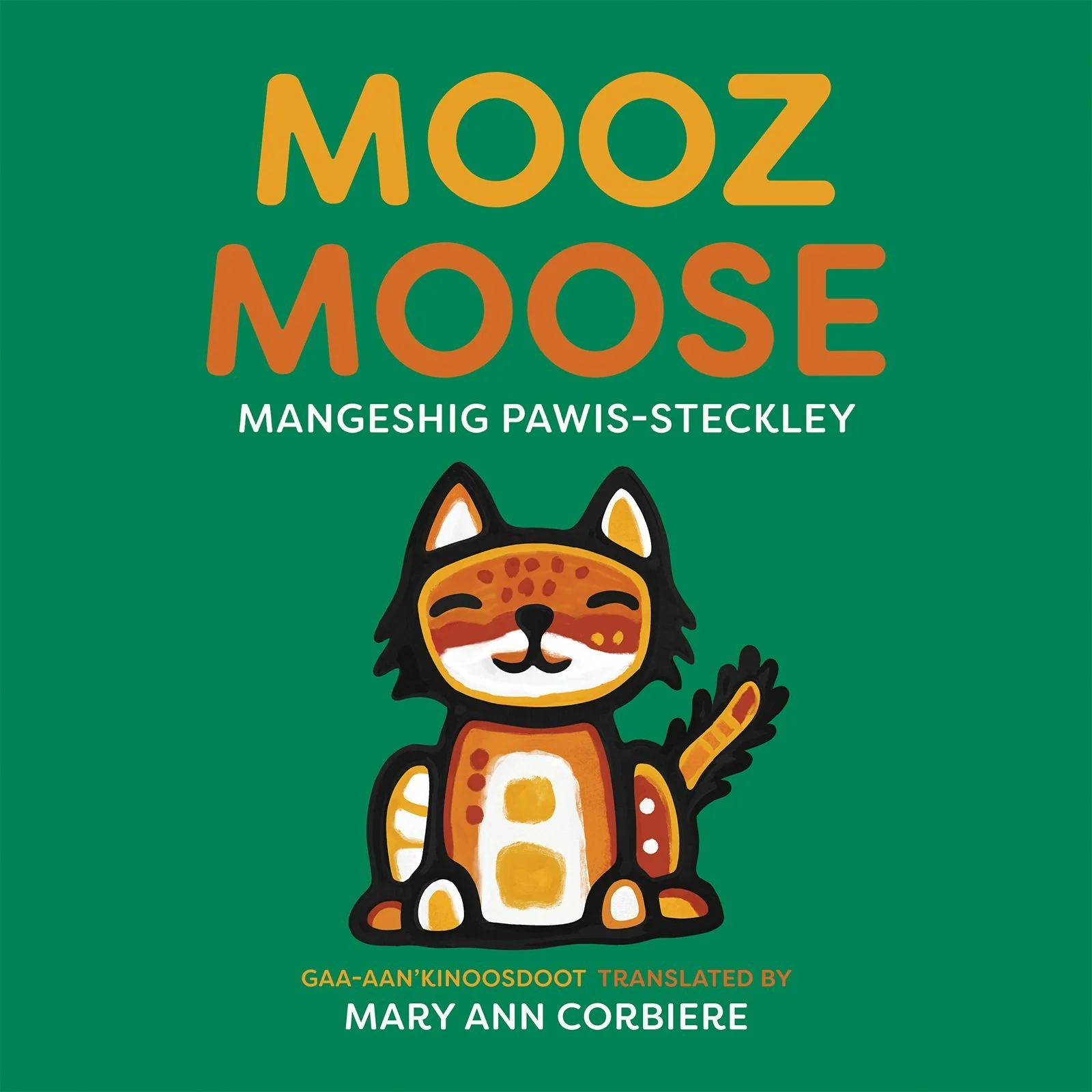
Mooz is a cat with the name of a moose and, at least on the page, the habits of several other animals. She races like a hare, sneaks through tall grass like a snake and caws like a jay. In Mangeshig Pawis-Steckley’s new children’s book, the joke built into her name becomes a way to introduce young readers to animal words and actions in English and Anishinaabemowin.
Mooz / Moose, published Sept. 1 by Groundwood Books, was written and illustrated by Pawis-Steckley and translated by Mary Ann Corbiere. Groundwood recommends the picture book for children ages three to six and describes it as a follow-up to Pawis-Steckley’s 2024 author-illustrator debut, Boozhoo! / Hello!, with both books introducing Anishinaabemowin to young children.
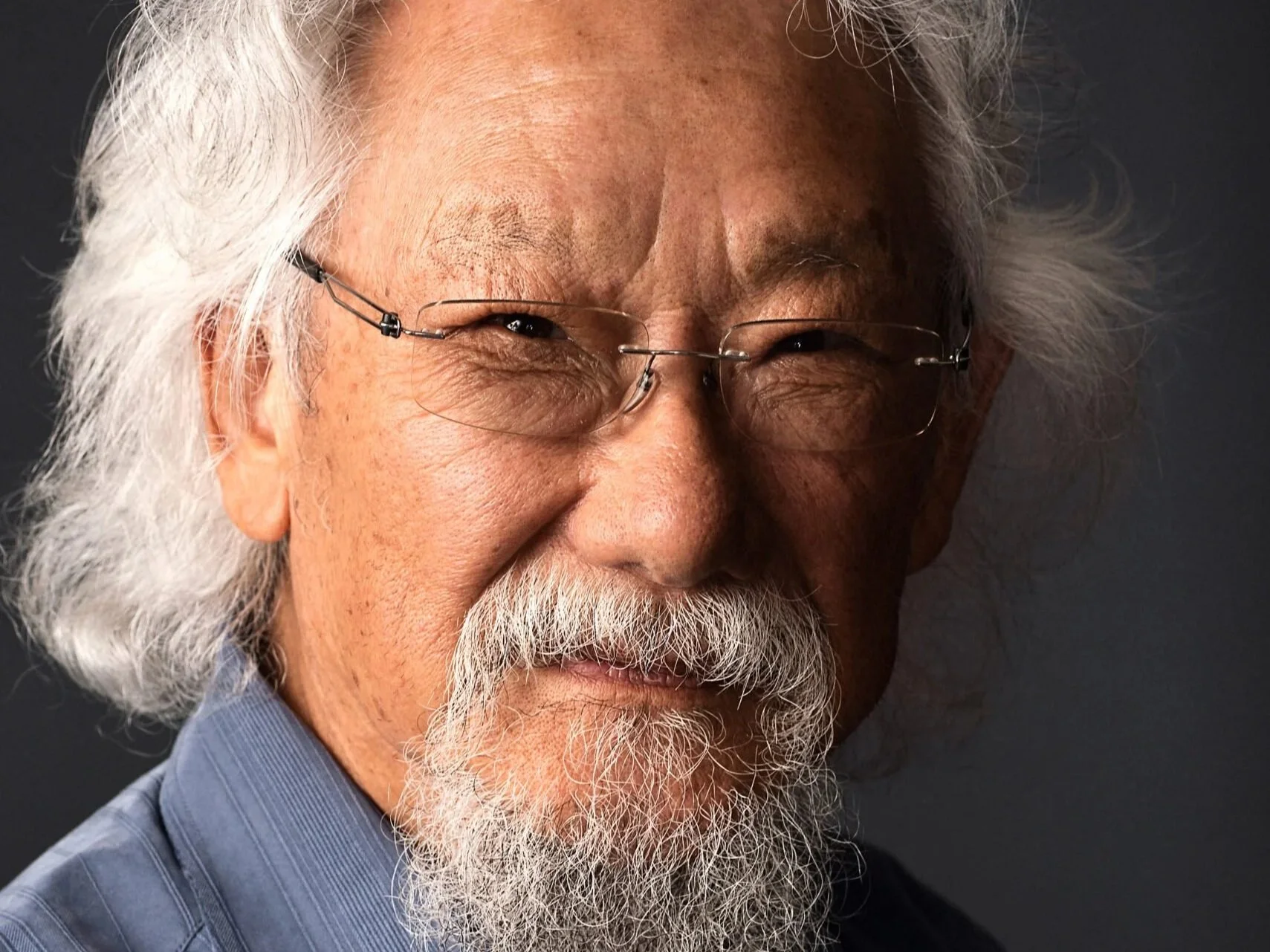
Pawis-Steckley, an Anishinaabe artist and member of Wasauksing First Nation, built the second book around a real family cat. In a September interview with Let’s Talk Picture Books, he said he had wanted to write about Mooz and her adventures, and the cat’s name supplied the structure. Mooz means moose in Anishinaabemowin, opening the door to a series of comparisons between the small cat and other animals.
Those comparisons changed as he revised the manuscript. Early versions included Mooz yawning like a tiger and sitting like a loaf of bread, but Pawis-Steckley eventually limited the animals to those associated with woodland ecosystems around the Great Lakes. He also tried to avoid repeating animals used in Boozhoo! / Hello! so the second book would add vocabulary rather than simply revisit the first.
The books, he told Let’s Talk Picture Books, are “mainly connected by the language.” He submitted three manuscripts to Groundwood while considering how to continue what began with Boozhoo!; the publisher acquired Mooz / Moose and Wiisni-daa! / Let’s Eat!, which is scheduled for publication March 2, 2027.
Pawis-Steckley has said the series began partly with his daughter in mind. What became Boozhoo! / Hello! grew out of his interest in making language material for very young children, and the first book introduced animals and actions in English and Anishinaabemowin. Groundwood released a board-book edition in June 2026 that includes a QR code linking readers to recordings of Corbiere pronouncing the animal names.
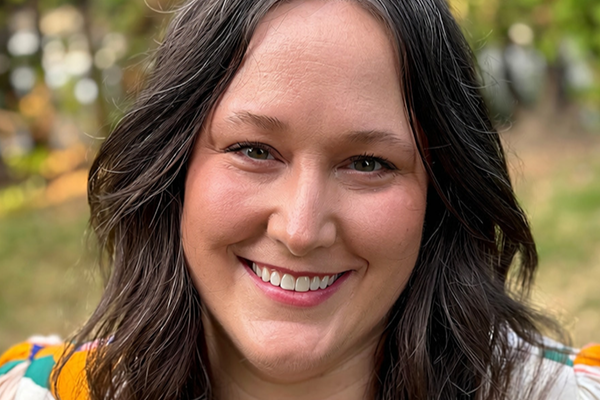
Corbiere grew up in Wiikwemkoong Unceded Territory on Manitoulin Island, where Nishnaabemwin was her first language. Laurentian University identifies her as a member of the community. She taught Nishnaabemwin at the University of Sudbury for decades and has worked extensively on language-learning resources, including as co-editor, with Rand Valentine, of the Nishnaabemwin: Odawa and Eastern Ojibwe Dictionary.
Groundwood describes Mooz / Moose as an English-and-Anishinaabemowin book, while Corbiere uses Nishnaabemwin for the language she grew up speaking. The dictionary she co-edited documents Odawa language varieties around Lake Huron, particularly on Manitoulin Island, along with Eastern Ojibwe.
Corbiere’s own writing about translation also illustrates why a children’s language book cannot always be built by pairing English words mechanically with equivalents on the facing page. In a translator’s note Groundwood published for Boozhoo! / Hello!, she explains that her translations reflect the way Nishnaabemwin is spoken in Wiikwemkoong and that information expressed explicitly in English can be handled differently in Nishnaabemwin.
Her work as an educator has addressed the same problem from the learner’s side. In first-person teaching material published through eCampusOntario, Corbiere discusses the limits of learning vocabulary without developing the ability to communicate. She describes language as something learners need for the activities and subjects that are part of their lives, including contemporary community life.
That background gives her role in Pawis-Steckley’s books particular weight. Pawis-Steckley is himself a learner of Anishinaabemowin, and he has spoken publicly about the difficulty of finding language resources while learning. In an August interview with Windspeaker, he said he had hoped to become fluent enough to converse in Anishinaabemowin with his grandmother, Audrey Pawis, before she died. Creating additional resources, he said, became one way he could contribute to language revitalization.
For Mooz / Moose, the vocabulary develops through behaviour as much as through animal names. Pawis-Steckley wrote the text first and then created the illustrations digitally on a tablet, using brushes that can imitate traditional media. The animals had to expand the language introduced in the first book while still describing things the real Mooz might plausibly do.
Pawis-Steckley told Let’s Talk Picture Books that when his first copy arrived, he placed it beside Boozhoo! / Hello! and his daughter asked him to read the new book. They began going through its words together, continuing a series he had originally started with her in mind.