What actually makes a TV show or movie Canadian?
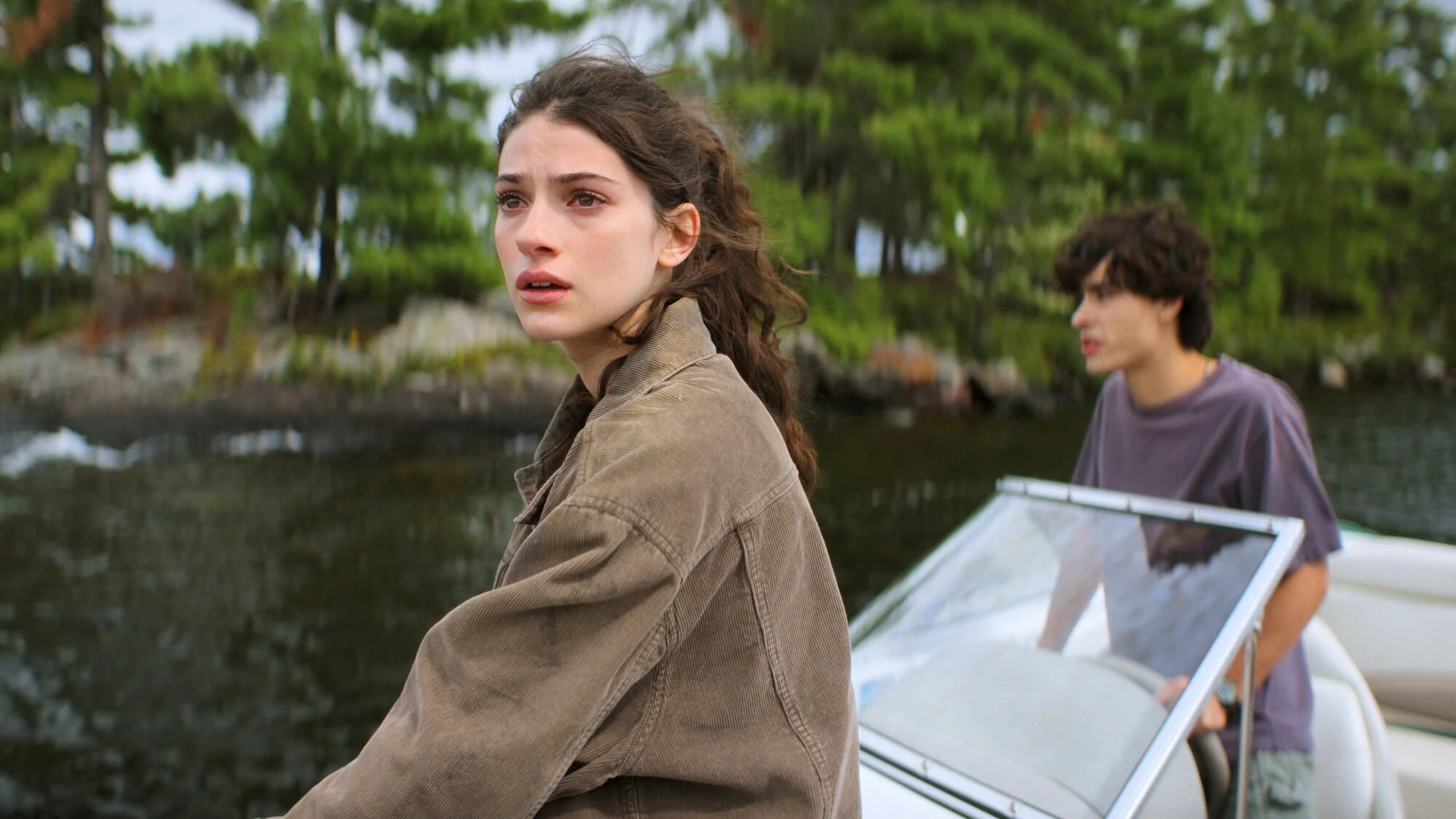
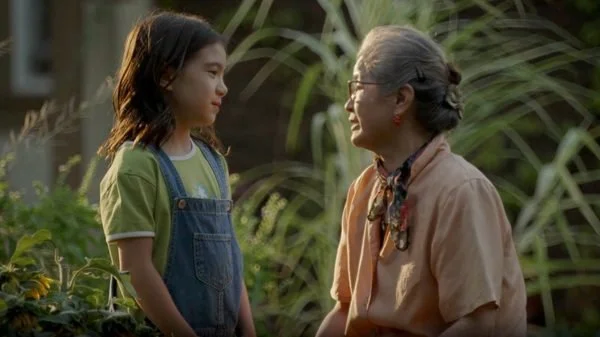
Ella Rubin as Annie in Sterling Point, a Prime Video series set in Canada and created by Canadian filmmaker Megan Park.
Photo credit: Prime Video
What actually makes a TV show or movie Canadian?
Sterling Point has a Canadian creator. Megan Park created and directed the Prime Video series, which follows 17-year-old Annie Jacobson after she inherits her grandfather’s island in Canada. The story takes her from New York into Ontario cottage country, with Muskoka becoming the setting for much of the series.
The production was also made in Ontario, with Anna Beben among its producers. There is plenty of Canada there, which makes Sterling Point a useful place to start trying to answer a surprisingly complicated question: What actually makes a television show or movie Canadian?
The Canadian setting does not settle it. Neither does filming in Ontario, hiring Canadians or having a Canadian creator. None of those things alone determines whether a production qualifies as Canadian content under Canada’s broadcasting and production systems.
The quickest shorthand may be to follow the money, although that only gets us part of the way there. Ownership and production control matter too.
Canada has formal systems for deciding what qualifies as Canadian programming, and they are concerned with who produces a project, who controls it, which Canadians hold key creative positions, where production money is spent and, under the modernized framework adopted by the CRTC, how much of its copyright remains Canadian.
The country where the story takes place has historically been much less decisive.
How Canada decides something is Canadian
For years, one of the central pieces of Canada’s Canadian-content system has been a points test based on key creative jobs.
Under the previous CRTC framework, a live-action production generally needed at least six out of 10 points. Two points were available for a Canadian director and two for a Canadian screenwriter, with additional points for Canadian lead performers, production design or art direction, cinematography, music composition and picture editing.
The points were only part of the test. The producer had to be Canadian and act as the central decision-maker, and there were Canadian spending requirements. At least 75 per cent of production services costs had to be paid to Canadians, while at least 75 per cent of post-production and laboratory costs had to be paid for services provided in Canada by Canadians or Canadian companies.
The Canadian Audio-Visual Certification Office, or CAVCO, and the CRTC have different roles within this system. CAVCO certifies qualifying Canadian productions and treaty co-productions applying for the federal Canadian Film or Video Production Tax Credit. The CRTC handles Canadian-program certification in other circumstances, including domestic productions and international co-ventures seeking recognition as Canadian content. Telefilm Canada administers the certification process for international treaty co-productions.
Producer control can reach well beyond having a Canadian name near the top of the credits. CAVCO looks at who is responsible for developing a project and who exercises creative and financial control, including decisions involving budgets, production schedules, personnel, financing and the exploitation of the finished production.
Canada has adopted a new framework for defining Canadian programming, although its regulatory implementation has been going through a separate process.
In November 2025, the CRTC adopted a modernized certification framework following its implementation work under the Online Streaming Act. Among the changes is an explicit requirement for Canadian copyright ownership. Under the framework, Canadians must retain at least 20 per cent of a production’s copyright, with the amount of Canadian ownership affecting the level of Canadian creative participation required.
The CRTC subsequently proposed new regulations to put the framework into effect, with Sept. 1, 2026, set as the intended start date, or the date of registration if the regulations were registered later. Productions that already qualified under the previous rules would retain their Canadian status.
The new framework also expands the creative positions that can count toward Canadian certification and introduces a bonus point connected to Canadian characters and setting. The provision has specific requirements for qualifying lead characters as well as the location of the story; for a series, those requirements apply to every episode.
A production can therefore receive some recognition for telling a Canadian story, but setting alone still does not make it Canadian.
That leaves Sterling Point in an unusual position. Its Canadian setting, Ontario production and Canadian creative participation are all factual parts of its identity. They do not, on their own, establish whether it is a certified Canadian program, and I have not found a public Canadian certification record that answers that question conclusively.
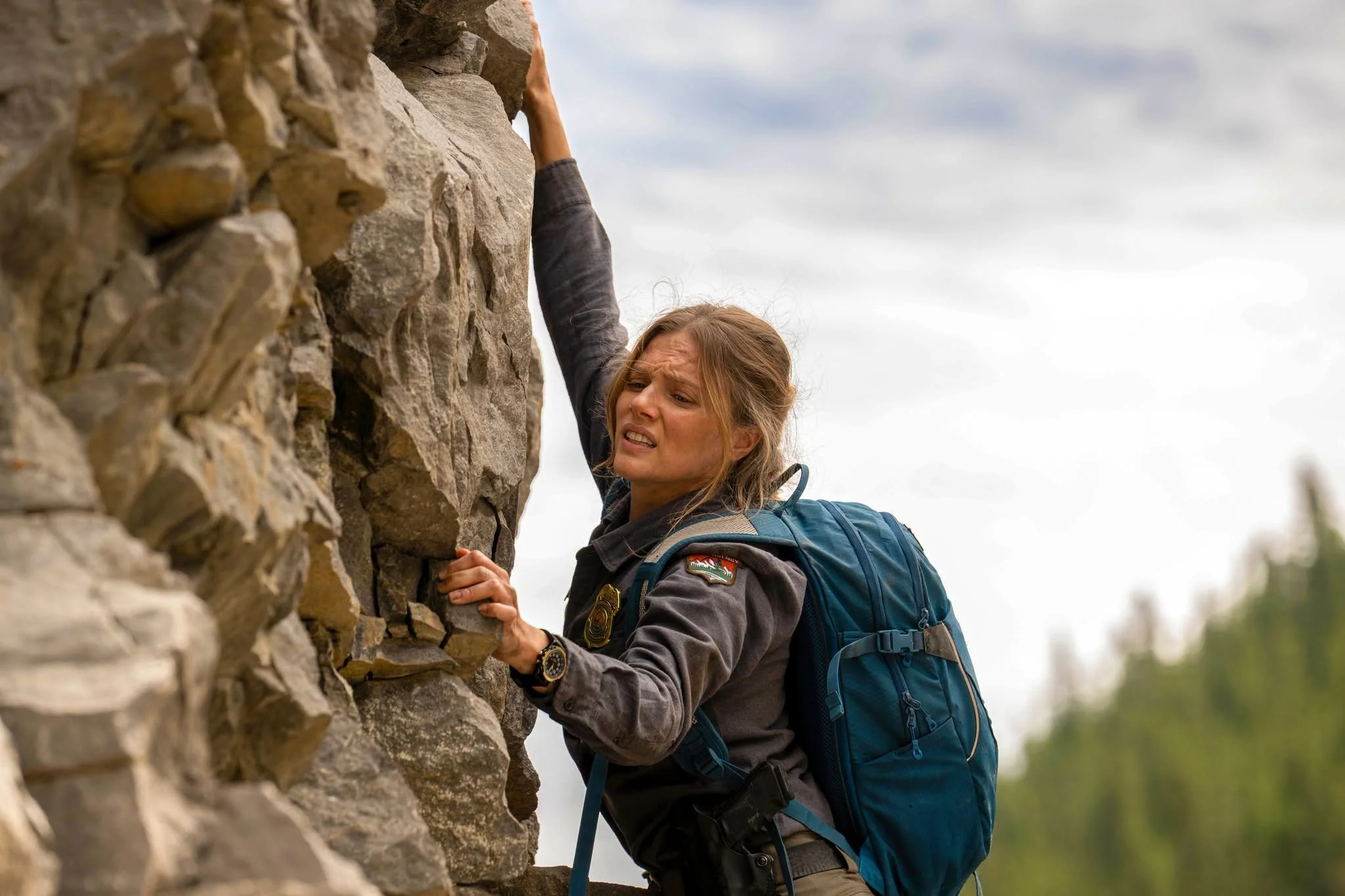
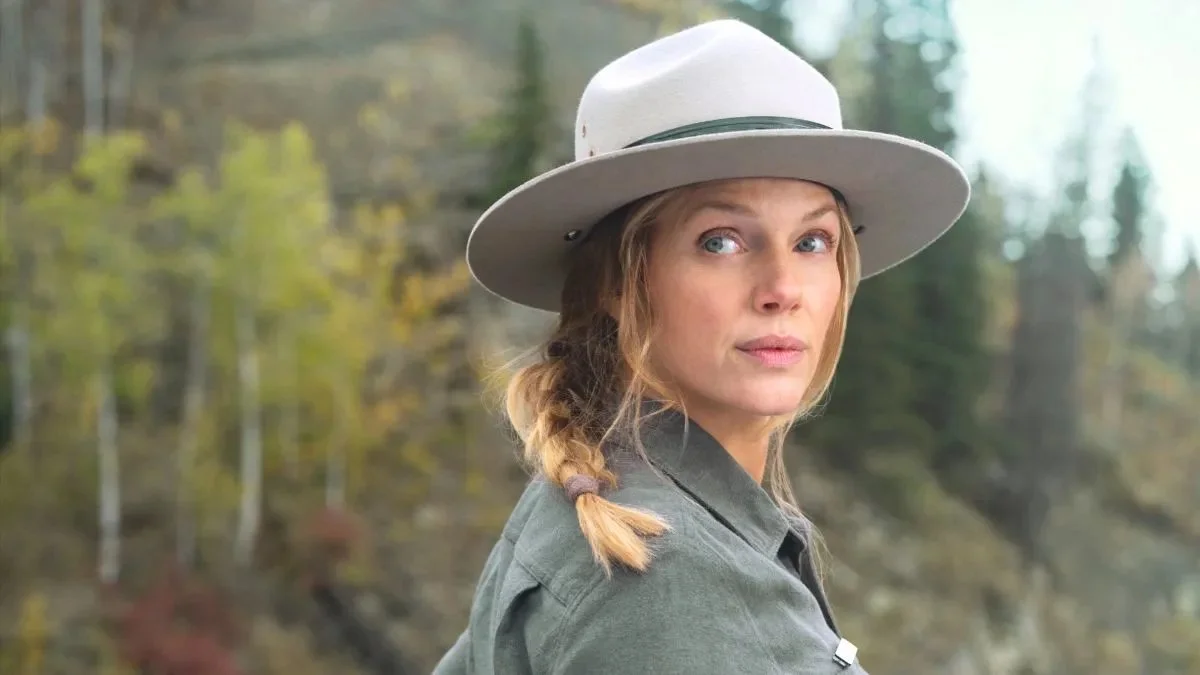
Tracy Spiridakos stars in Anna Pigeon, which filmed in Calgary and is Bell Media’s first co-commission with USA Network.
Photo credit: Bell Media/Crave
Why Canada appears in the credits of so many productions
Canada also has a large production-services industry, which creates another source of confusion.
A foreign production can come to Canada, employ Canadian actors and crew, rent Canadian studios, shoot on Canadian streets and receive Canadian tax incentives while remaining foreign-controlled.
The federal Film or Video Production Services Tax Credit exists specifically to encourage Canadian and foreign-based producers to employ Canadians. It currently provides eligible production corporations with a refundable tax credit equal to 16 per cent of qualified Canadian labour expenditures.
That program is separate from the Canadian Film or Video Production Tax Credit, which supports eligible Canadian productions and currently provides a refundable tax credit equal to 25 per cent of qualified labour expenditures, subject to the program’s limits and requirements.
Canadian Heritage says productions using the production-services credit generally have non-Canadian creative control and non-Canadian copyright ownership. That is the side of the Canadian screen industry that allows a major foreign production to come here, employ Canadians and spend substantial amounts of its production budget in Canada while remaining foreign-controlled.
Government acknowledgements and Canadian tax incentives in the closing credits therefore do not establish a production’s nationality by themselves. The particular program and the structure of the production matter.
The reverse is familiar to Canadian viewers. American television series have been broadcast in Canada for decades without becoming Canadian programs because a Canadian broadcaster carried them. A Canadian production likewise does not lose its Canadian status simply because an American network or international streaming service becomes involved.
The series Anna Pigeon arrived on USA Network and Crave in August 2026 and is based on Nevada Barr’s novels about a park ranger investigating crimes in U.S. national parks. Its fictional world is American, while much of the machinery producing that world is Canadian.
Anna Pigeon filmed in Calgary. Its star, Tracy Spiridakos, is Canadian, as is showrunner Morwyn Brebner. The series is produced by Cineflix Studios, December Films and Calgary-based SEVEN24 Films for USA Network in association with Bell Media, which describes the project as its first co-commission with USA Network.
Alberta is standing in for the United States in Anna Pigeon, while Ontario is allowed to remain Ontario in Sterling Point. Neither fact, by itself, tells us the regulatory nationality of the production.
Bell’s description of Anna Pigeon as a co-commission also raises another question about the language used around international television. A co-commission is not automatically an official international co-production.
Canada has formal audiovisual co-production treaties with other countries. Under that system, a Canadian producer works with a producer from a treaty country according to the requirements of the applicable agreement. Productions that qualify receive national status in the participating countries and can gain access to benefits available to domestic productions.
Canada also recognizes international co-ventures that fall outside its treaty system. Those have their own requirements for Canadian creative participation, financing and production involvement.
A label such as “Canadian-British” does not, by itself, explain the underlying arrangement. It could refer to an official treaty co-production or another form of international production relationship. The actual production structure has to be checked.
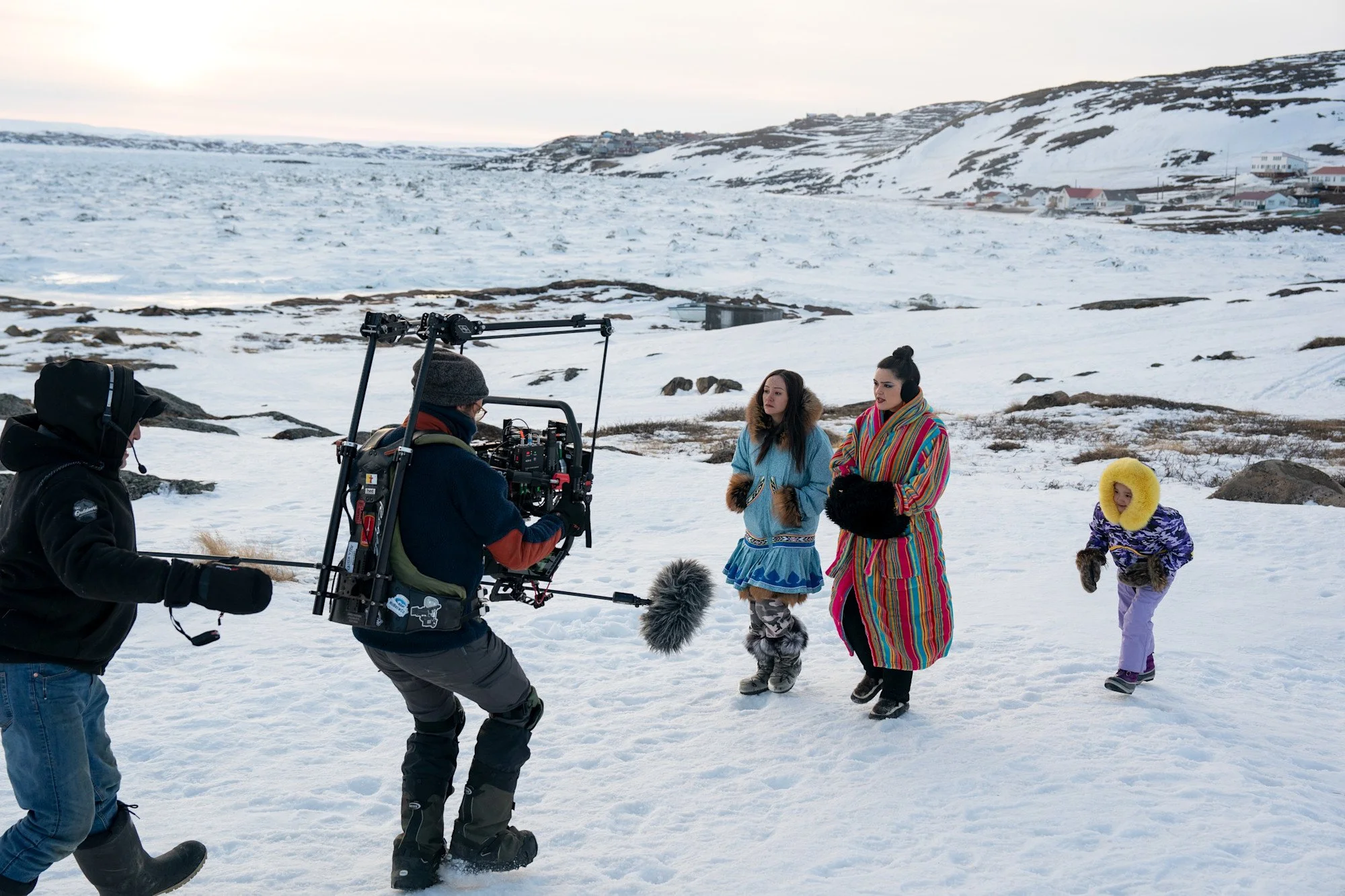
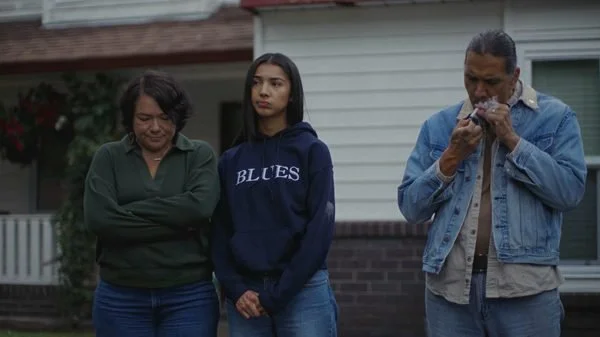
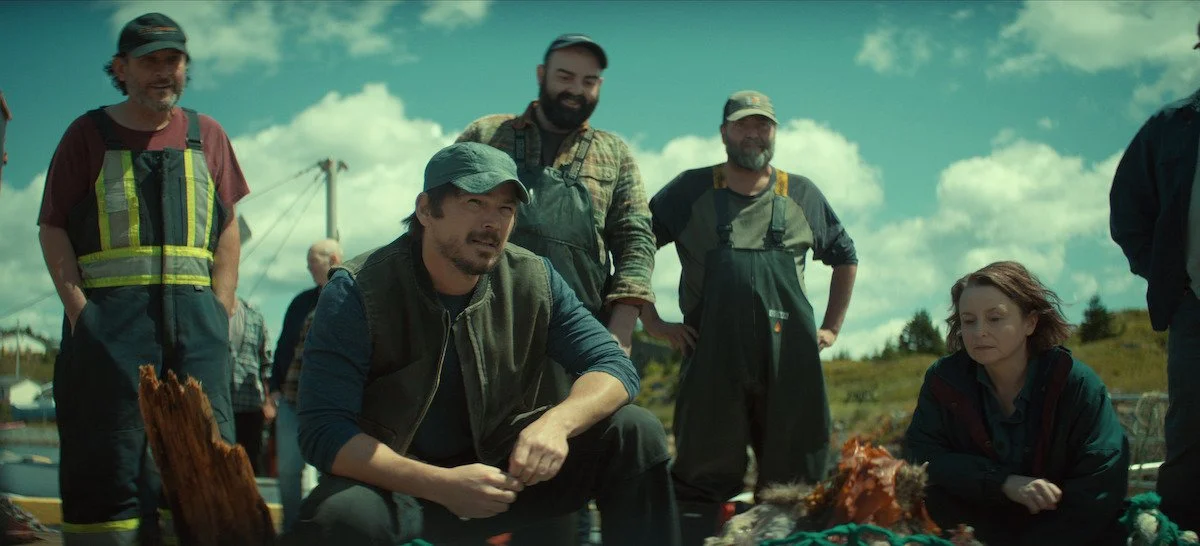
Maika Harper, Anna Lambe and Hope Akeeagok on the set of North of North in Nunavut.
Photo credit: Jasper Savage/Netflix
When the pieces line up
Netflix and CBC co-commissioned North of North in association with APTN. It was created by Inuit filmmakers Stacey Aglok MacDonald and Alethea Arnaquq-Baril and produced by Red Marrow Media and Northwood Entertainment. Production began in Nunavut, and the series centres on Siaja, played by Anna Lambe, a young Inuk mother living in the fictional Nunavut community of Ice Cove.
Netflix calls North of North its “first series from Canada.”
Its presence on Netflix does not turn it into an American series. CBC and APTN remain part of its production history, while the companies and creators behind it remain Canadian.
Created by Eugene and Dan Levy and produced by Not A Real Company, Schitt’s Creek aired on CBC. Its subsequent international reach did not rewrite the production that was made in Canada.
The international relationships are particularly visible in Orphan Black. The clone thriller starring Tatiana Maslany was produced in Toronto by Temple Street Productions for Space and BBC America. Bell Media described it as a Space original series and later explicitly called it a Canadian original drama produced in partnership with Space and BBC America.
BBC America was therefore built directly into Orphan Black’s production history while the series remained identified by its Canadian broadcaster as Canadian.
These examples also explain why labels such as “Canadian,” “Canadian-American” or “Canadian-British” deserve a closer look before they are repeated. Canada’s system distinguishes among domestic Canadian productions, official treaty co-productions, international co-ventures and foreign productions made here using Canadian production services. A broadcaster, distributor or streaming platform adds another layer without necessarily determining the nationality of the program.
Prime Video gives us a series in Sterling Point created by Canadian Megan Park about an American teenager who inherits an island in Canada. The production was made in Ontario, and Canada is present in both the story and the making of it.
Whether Sterling Point is formally a Canadian production requires evidence from the production and certification side that its Muskoka setting cannot provide. Until that evidence turns up, the most accurate answer is also the least tidy one: Sterling Point is a Canadian story whose formal Canadian-content status remains unconfirmed.