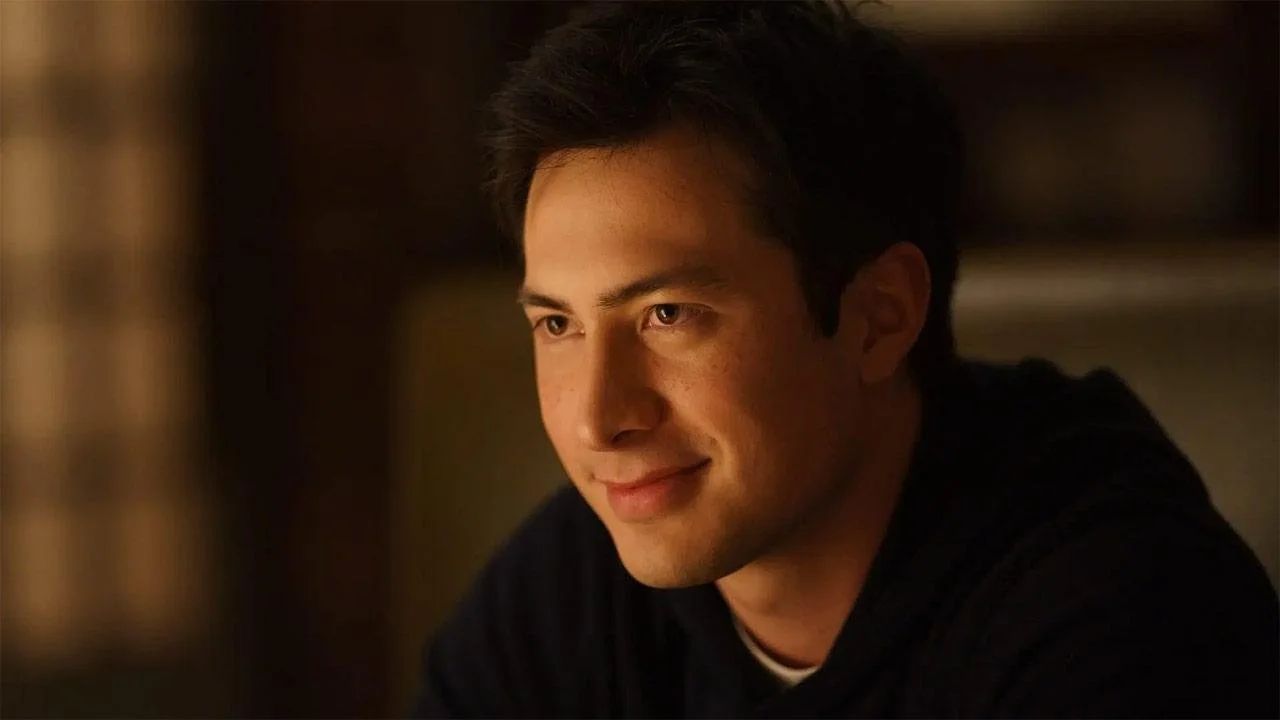
Canadian singer-songwriter Steven Hardy has released a new version of Leonard Cohen’s “Everybody Knows,” featuring rewritten lyrics about Donald Trump.
Photo credit: Elle Neill
London, Ontario songwriter Steven Hardy has recorded a new, politically charged version of “Everybody Knows,” the song Leonard Cohen and Sharon Robinson wrote for Cohen’s 1988 album I’m Your Man. Hardy calls his adaptation “Everybody Knows (Donald Trump’s a Liar)” and has shared a video criticizing Trump ahead of the November 3 U.S. midterm elections. He says the recording has attracted more than a million views on Facebook.
As a Canadian unable to vote in the U.S. elections, Hardy said in an interview that he had been looking for a way to express his frustration with Trump through songwriting. He had already shared a parody of Cohen’s “Hallelujah,” titled “Mr. Noodles,” and received an encouraging response on Facebook. That led him to consider another Cohen song.
Why “Everybody Knows”
The Canadian Songwriters Hall of Fame credits Cohen and Robinson as co-writers of “Everybody Knows.” Robinson composed its music and worked with Cohen on the chorus, while the recording appeared on Cohen’s 1988 album I’m Your Man. Hardy was drawn to the original song’s observations about inequality and the willingness to recognize public dishonesty without confronting it. He sees a parallel with his own criticism of Trump and the president’s political allies.
Hardy wanted to preserve the repeated opening phrase “Everybody knows,” using it to build a list of his criticisms of Trump. He also kept what he called the “spare, hypnotic melody and minor-key chord structure.” He considered including the bridge, then omitted it to make the recording shorter. The result is a direct political adaptation of a song Hardy has admired for years.
He described the project as a way to express his anger and frustration about U.S. politics. To Hardy, the original song’s suggestion that people recognize a problem and pretend otherwise applies to some of Trump’s supporters and allies. That interpretation guided what he chose to criticize in his new lyrics.
The reaction on Facebook
By October 30, Hardy was reporting that his Facebook video had passed one million views. “I realized it was reaching a much broader audience when the comments started coming in faster than I could respond to them,” he said. After a couple of hours, he gave up trying to answer everyone.
Hardy says the earliest comments were overwhelmingly complimentary, although criticism arrived as the video circulated more widely. Some commenters defended Trump, while others criticized Hardy’s singing and piano playing. He generally left negative comments in place and avoided arguing with their authors, but blocked a few people whose comments he found offensive.
A songwriting career beyond the protest song
Hardy began writing songs in elementary school and once hoped to become a full-time songwriter. He earned an honours music degree in theory and composition from Western University and has taught songwriting there. The City of London’s music office identifies him as a SOCAN award-winning songwriter, composer and producer.
Hardy recalls that a publishing arrangement with Frank Davies’s TMP and recognition through a SOCAN songwriting workshop made a professional career seem possible. That never became his livelihood, he said, but he has continued writing and recording music in his home studio.
One recording he particularly values is “I’m Still Waiting for Christmas,” performed by Maya Rae when she was a young teenager. The Songwriters Association of Canada credits Hardy with writing and producing the song. Rae later became a member of the vocal trio Tiny Habits, whose career Hardy says he has enjoyed following.
Hardy also co-wrote “Every Time It’s Christmas” with Murray McLauchlan. The song appears on the Lunch at Allen’s holiday album Zuzu’s Petals, and Hardy singled out Marc Jordan’s vocal performance on that recording as a favourite of his.
What happens to the recording now
Hardy has written about social issues before, although he says he has never produced anything this explicitly political. “I’m not sure whether it’s a new direction or just a temporary detour,” he said. He has shared his recording on TikTok, Threads and Instagram as well as Facebook, with different levels of engagement across the platforms.
He recorded and produced the adaptation himself, without additional musicians, and says he has no plans to release it through music-streaming services. Asked about permissions for his version, Hardy replied, “I have not obtained any permissions.” Canadian copyright law recognizes fair dealing for parody or satire, although whether a particular adaptation qualifies depends on the circumstances.
Hardy hopes the recording also draws attention to Cohen and Robinson’s original. He described himself as a lifelong Leonard Cohen fan and said, “I’d be very happy if my version introduced even a few people to the original.”