Joella Cabalu takes the rom-com past the meet-cute in First Comes Love: Nakabingwit
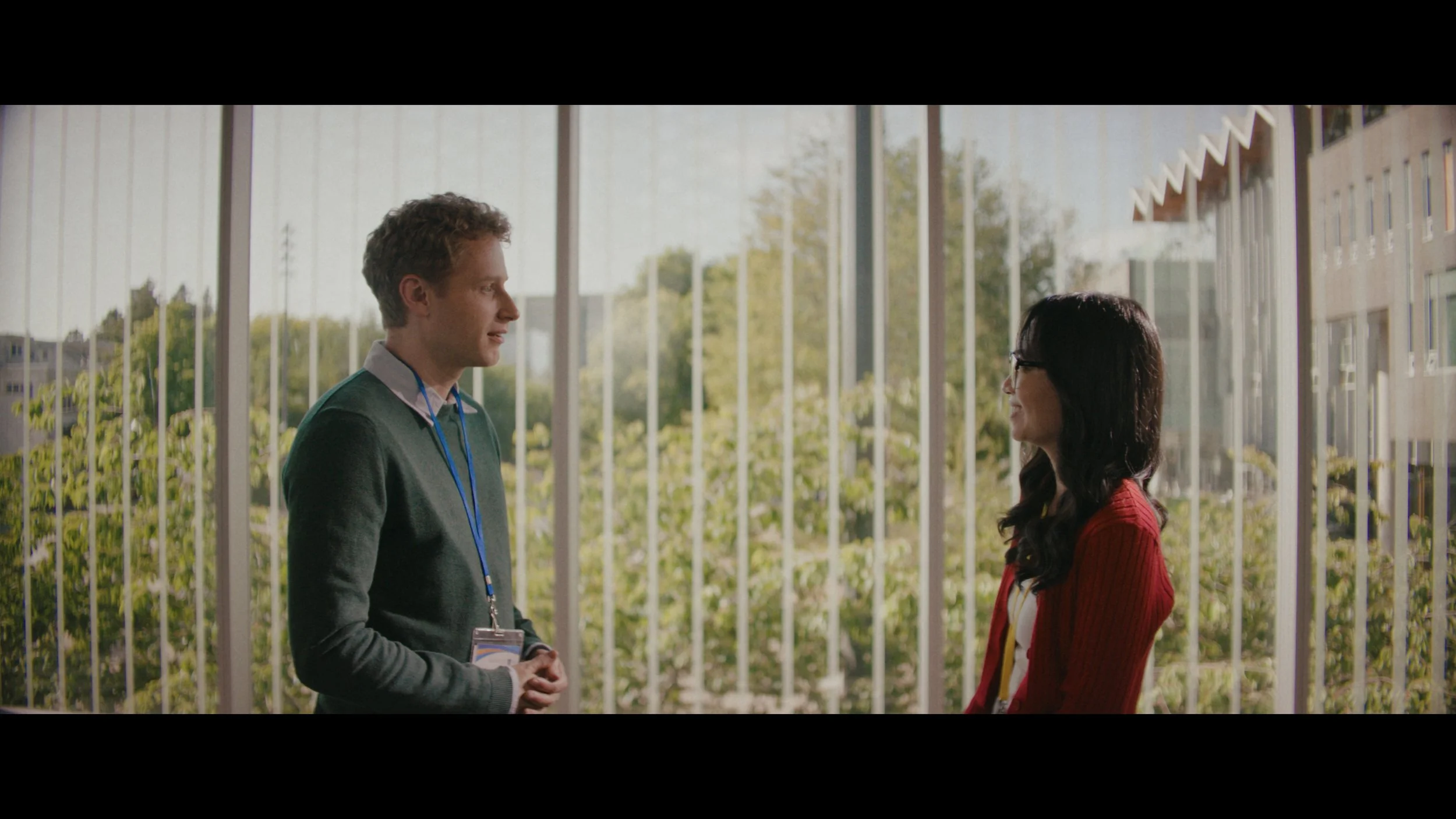
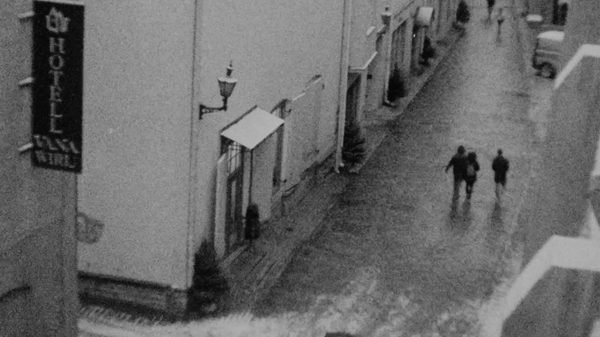
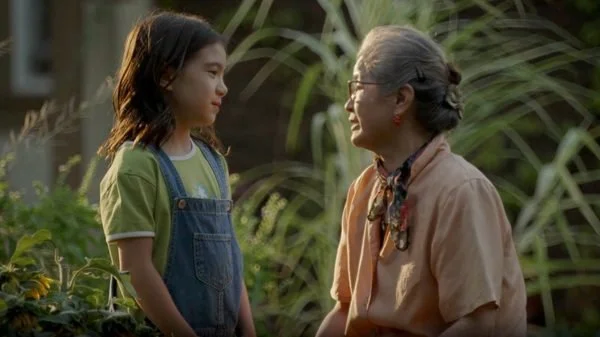
Gabrielle Jacinto and David Lennon portray Joella and Luka in a dramatized meet-cute scene from First Comes Love: Nakabingwit.
Photo credit: Angel Lynne / National Film Board of Canada
Joella Cabalu grew up in the 1990s watching romantic comedies as, in her words, an “instruction manual” for relationships. The formula was familiar enough: fall in love, find the right person, and let the story end somewhere around happily ever after. Once Cabalu began navigating adult relationships herself, she found considerably less guidance for what came next, particularly when race, culture and disagreement entered the picture.
That gap became part of the foundation for First Comes Love: Nakabingwit, Cabalu’s first feature as writer-director, which will have its world premiere at the Vancouver International Film Festival on Oct. 3. The National Film Board of Canada documentary follows three Filipina-white couples in Montreal, Vancouver and Toronto while Cabalu folds scenes from her own relationship into the film through scripted reenactments. VIFF has programmed the film in its Northern Lights series and BC Spotlight, with further screenings on Oct. 7 and 10.
In Toronto, storytelling facilitator Justine Abigail Yu and her British partner Dominic Pollard have moved into a studio apartment after years of long-distance dating, where living together also brings conversations about white privilege, racism and power. Vancouver couple Rhea Paez and Eric Lotto are 15 years into their marriage and raising mixed-race children, which has pushed them to consider how they talk about race and culture within their family. In Montreal, Veronica Bertiz and Mathilde Saint-Marie have moved from an anonymous online flirtation into a queer relationship where political disagreements and everyday differences become part of the conversation.
Cabalu’s interest is in the conversations themselves and in the ways people can reduce a partner to a racial or cultural category while trying to talk about difference. In an interview included with the NFB’s press materials, she points to a comment from Yu about the way colonialism and white supremacy can operate inside interracial relationships when partners begin to “other” each other. Cabalu connects that observation to her own tendency to bring racial stereotypes into an argument and lose sight of the individual standing in front of her.
Cabalu keeps the pleasure and familiarity of romantic comedy visible in the film while using its conventions to move into territory those stories often leave outside the frame. Attraction and connection lead into conflict, cultural difference and the practical work of staying together. Her own story runs through the documentary in dramatized scenes, with Gabrielle Jacinto playing Joella and David Lennon playing her partner, Luka. VIFF describes those scenes as including their meet-cute and a period of disconnection during the early months of the pandemic.
Cabalu had not originally planned to put her relationship at the centre of the film. During development, NFB producer Teri Snelgrove encouraged her to reconsider, and Cabalu began to see her own experience reflected through the three couples she was following. The decision also took her into unfamiliar filmmaking territory. Cabalu had worked primarily in non-fiction, while First Comes Love required her to write scripted dialogue and direct actors as well as work with documentary subjects. She has said that dramatizing her own life gave her enough distance to explore personal material that she did not want to address by appearing directly on camera again.
The film’s title comes from a term Cabalu encountered within Filipino culture. She describes nakabingwit as a Tagalog fishing term for catching a big fish that can also be used colloquially for a Filipina who has landed a rich white husband. She learned the expression after a friend suggested she was “winning” because she was dating a white man. When Cabalu later spoke with other Filipino Canadians about the term, she encountered both pride and shame around it, along with questions about interracial relationships, colonialism and the status attached to whiteness. She chose to address the term from her own Filipino Canadian perspective rather than leave those assumptions unexamined.
The subject was already close to Cabalu’s earlier work. The Vancouver-based filmmaker studied documentary production at Langara College, and her first mid-length documentary, It Runs in the Family, followed Cabalu and her brother through a personal exploration of sexuality, family and queer life in the Filipino diaspora. Her later projects continued to work around migration, family and relationships from different directions. For the NFB’s First Photo Here in 2020, she curated photographs and stories submitted by newcomers to Canada; the NFB noted at the time that Cabalu, who was born in the United States, raised in Brunei and arrived in Canada at six, was already developing work about first- and second-generation immigrant experiences.
Her subsequent directing credits include Koto: The Last Service, Ode to a Seafaring People and the 2022 NFB short Crystal Pite: Wordless Language. Cabalu had also entered feature filmmaking from the production side before directing one herself. She produced Nisha Platzer’s Back Home, a Telefilm Talent to Watch project that participated in Cannes Docs and screened at VIFF in 2022.
By October 2025, the NFB had publicly listed Cabalu’s feature among its projects in production under the title Nakabingwit: First Comes Love. The agency identified it as a 100-per-cent NFB production through its Western Documentary Unit, with Snelgrove producing. The finished film arrives at VIFF with the title reversed and Shirley Vercruysse and Tina Ouellette as executive producers. Peter Planta is director of photography, Sarah Hedar edited the film, Rosaura Lezama handled production design, Eva Madden is sound designer and Mary Ancheta composed the score.
Several other Filipino Canadian artists appear in the credits, although neither Cabalu nor the NFB has presented their involvement as an explicit identity-based production strategy. Eirene Cloma, the Toronto-based musician and member of the kulintang ensemble Pantayo, provides vocals, while B.C.-based queer, non-binary Filipinx artist Kimmortal’s “Ice Palaces” appears on the soundtrack. Camera operator and first assistant camera Marc Yungco identifies himself professionally as a Filipino-Canadian cinematographer based in Vancouver.
Yu brings another connection to Canadian diaspora storytelling through her work outside the film. She is the founder of Living Hyphen, a Canadian storytelling community built around people whose lives in Canada intersect with cultural roots elsewhere. Within First Comes Love, those questions are worked out within the practical territory of a relationship: sharing a home, disagreeing with someone, deciding how to talk to children and figuring out what each partner is responsible for learning. VIFF describes the film as following women in the Filipino diaspora as they look for language to discuss race with their white partners, while Cabalu has described her own interest in finding room for differences within families and communities rather than treating diaspora as a single experience.
First Comes Love: Nakabingwit premieres Saturday, Oct. 3 at 5:45 p.m. at SFU Woodward’s in Vancouver. VIFF will screen it again Oct. 7 at International Village and Oct. 10 at Alliance Française, and the film is also part of the festival’s Ignite high-school program.