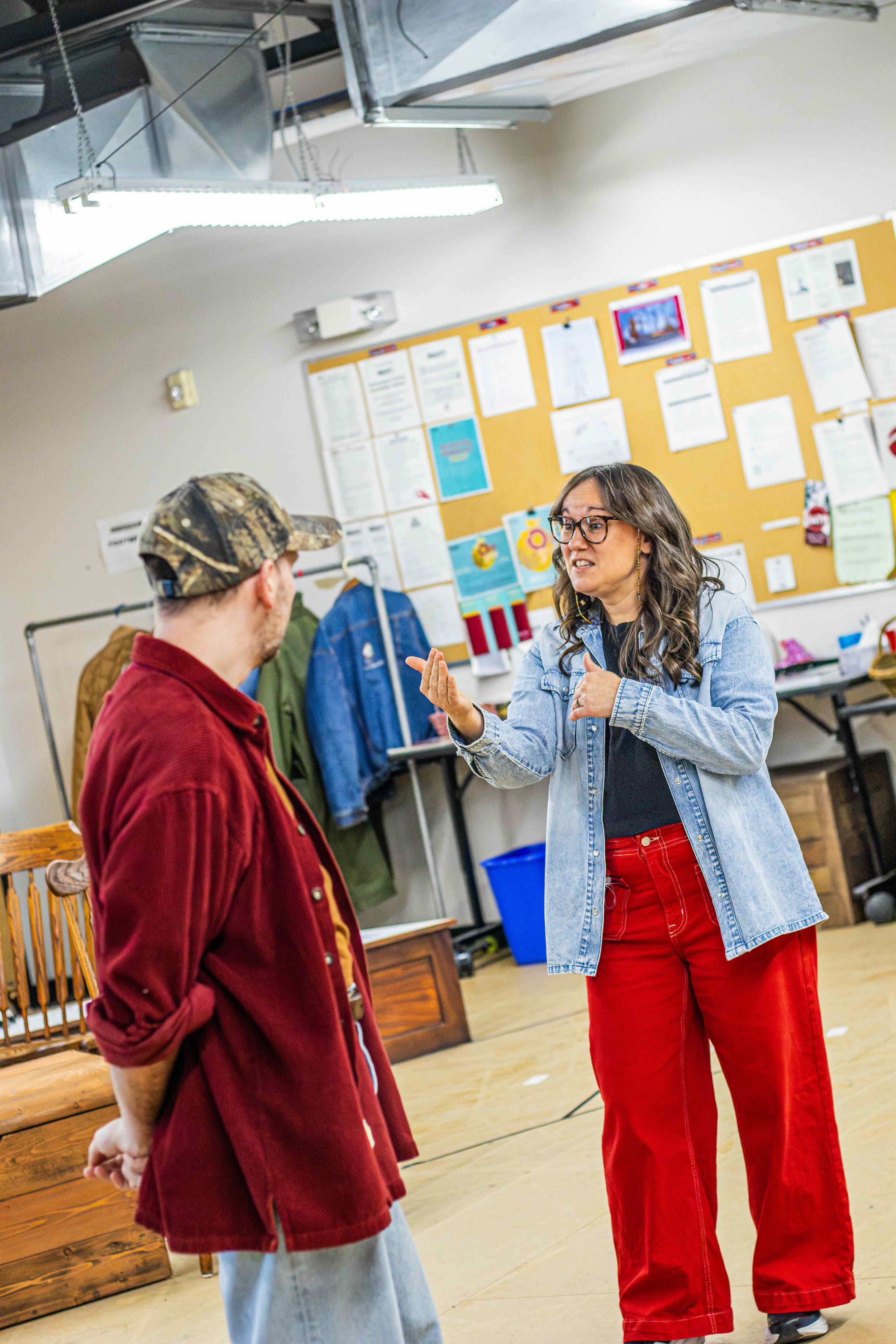
Director Erin McGrath works with actor Matt Pilipiak during rehearsals for Persephone Theatre’s Louisa May Alcott’s Little Women in Saskatoon.
In Lauren Gunderson’s adaptation of Little Women, Louisa May Alcott tells the story of the March sisters while stepping into the role of Jo, the young writer at its centre. Edmonton actor Hayley Moorhouse plays both Alcott and Jo in Persephone Theatre’s Saskatoon production, leaving director Erin McGrath with a particularly demanding task: deciding when the audience is hearing the novelist and when the characters are living the story.
Previews begin December 2, with the official opening December 4 and performances through December 20. Gunderson’s version, first staged in 2024, brings Alcott’s writing process into the action and makes room for passages from the novel alongside dialogue. McGrath says the adaptation appealed to her because it places the familiar March family alongside the woman who wrote them.
“I’m a big fan of Lauren Gunderson’s work. She has really made it a priority in her writing to celebrate women throughout history, some of whom we have heard of, like Alcott, but also others that have been overlooked,” McGrath said. She was particularly interested in how Gunderson would approach a novel that has been adapted repeatedly, and in the chance to tell part of the author’s own story.
The play includes moments in which Alcott learns she has been commissioned to write Little Women, reacts to the suggestion that she produce a book for “girls,” and begins borrowing from her family’s experiences. McGrath says those episodes establish an important difference between Louisa and Jo: the author is looking back with knowledge her fictional counterpart has yet to acquire. That difference has been part of McGrath’s work with Moorhouse as they trace each woman’s changing point of view.
“Louisa has a maturity about her and lived experience that Jo does not yet have when we start the show,” McGrath said. “It’s been thrilling to find the subtle shifts from Louisa welcoming the audience on her journey and then stepping into her own novel as Jo.” For Moorhouse, those shifts involve more than a change in age. McGrath says they have discussed what each woman is fighting for and how Louisa’s views develop across the story.
Jo and Louisa share a desire for independence, and McGrath points to their affectionate embrace of the word “spinster.” Yet Louisa also steps outside the novel to consider what readers expect from its heroine. McGrath describes a writer negotiating between the future she wants for Jo and the ending she has been pressed to provide, including Jo’s romantic conclusion. The play also returns to Louisa’s affection for her family and sisters, whom McGrath describes as the central love of the author’s life.
Making those changes of perspective visible has required close attention to the actors’ relationship with the audience and one another. Dialogue can turn into description or an interior thought, and the cast must decide which characters can hear what is said and which lines are directed elsewhere. “The text flows seamlessly from dialogue to novel narration and influences the action in the scene,” McGrath said.
McGrath and the cast approached the script almost as a score. “We spent a good deal of time treating it almost like music, choreographing where the focus needed to be, when you can look at one another, when it needs to move away, when you can respond to it and when it is an inner thought.”
The March sisters have been another major part of the rehearsal work. McGrath wanted to avoid familiar shorthand that makes Beth simply good, Meg prim and Amy an irritating younger sister. “Beth can be playful, Meg can be forceful, and Amy is kind and passionate,” she said. “Elements of Jo/Louisa exist in all of them.”
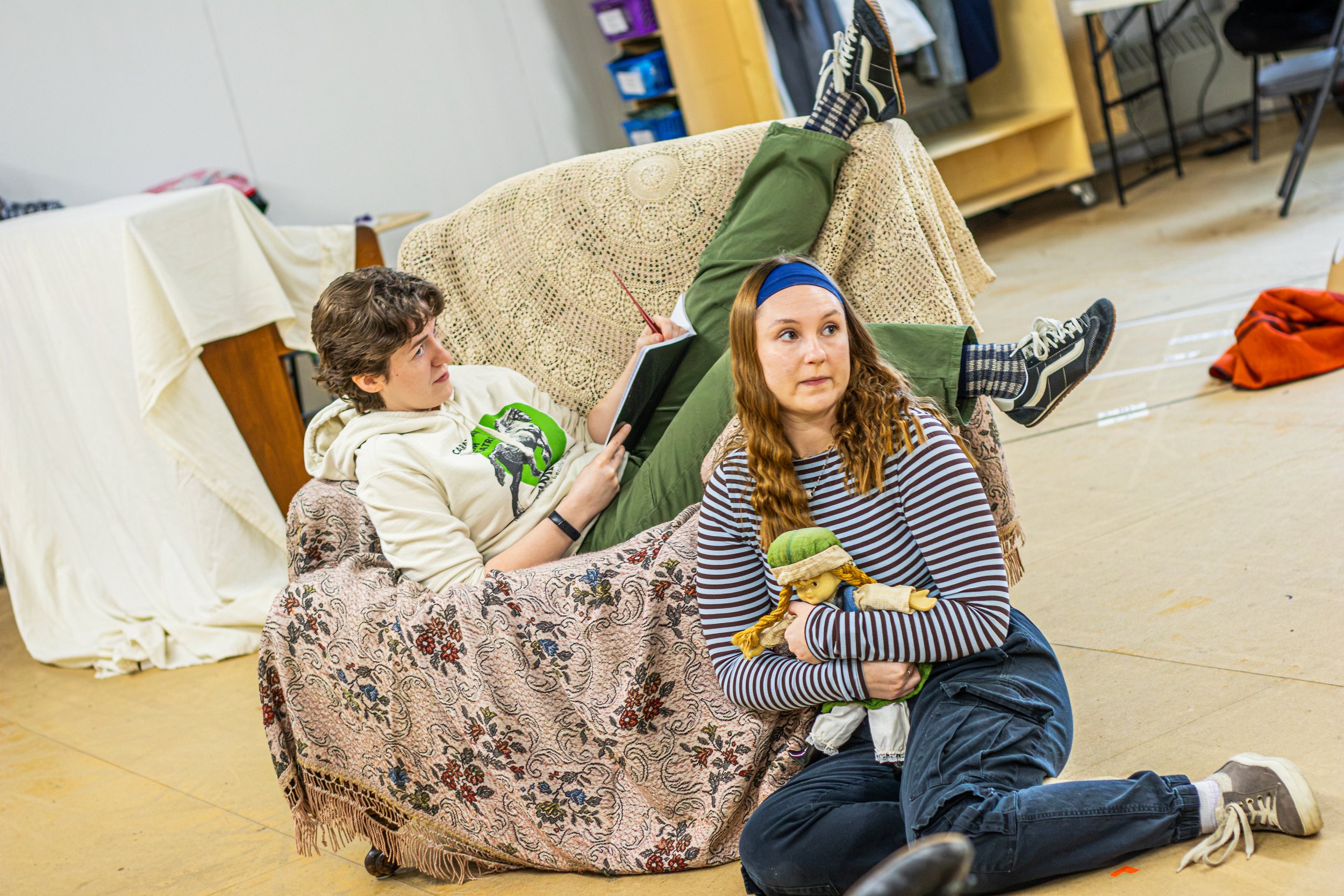
McGrath says the cast has been making the sisters physically comfortable together, climbing on one another, cuddling and even pulling hair when arguments break out. She describes a scrappy fight that ultimately leads to Amy falling through the ice while skating. Moorhouse is joined by Johanna Arnott as Meg, Savana Dunlop as Beth and Jenna de Villiers as Amy, with Lisa Bayliss playing Marmee and Aunt March.
McGrath and set designer Brooklynn Bitner have kept the stage flexible, with elements suggesting fragments of memory instead of fully realistic rooms. The staging draws on the sisters’ habit of putting on plays, with everyday objects taking on different meanings as the story progresses. McGrath says she wants the audience to use its imagination in much the same way the girls do.
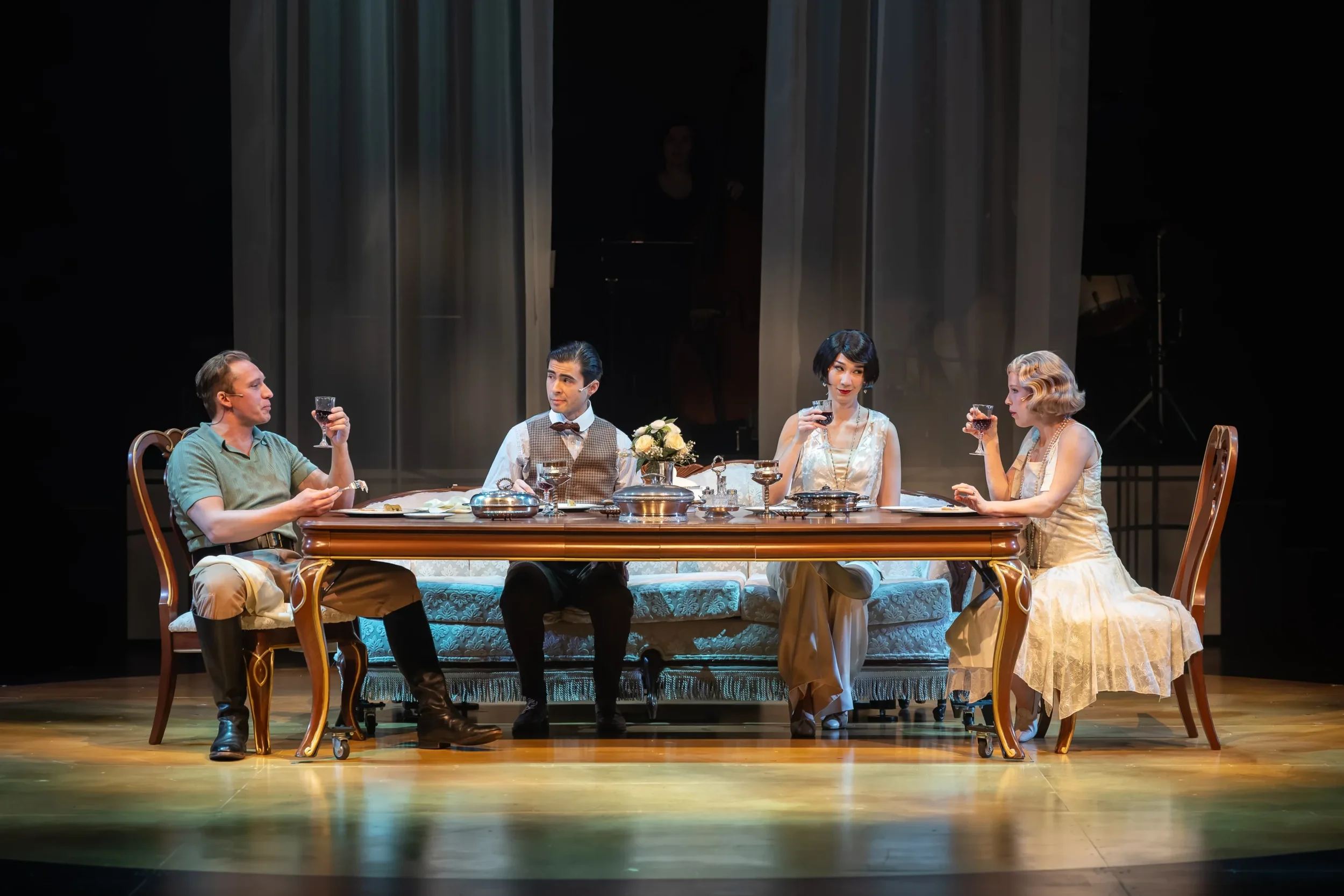
Costumes provide another clue to the family’s circumstances. McGrath says Anna Yaworski’s period designs are slightly behind the fashions of the day, reflecting the family’s limited means, and relaxed enough for the actors to move easily. Each sister’s clothing also reflects her individual tastes, with room for the physicality McGrath has been developing in rehearsal.
McGrath has directed Anne of Green Gables and Silent Sky, two productions she includes among her work on women pursuing their own futures. For this adaptation she has been thinking about the generations of audiences who have encountered the March sisters in different forms, and about what this production can contribute to that history. She sees the sisters as having a sense of who they are even while they are still growing. “This adaptation by Lauren Gunderson is special because these women aren’t waiting to become grownups, in many ways they already know and value who they are,” McGrath said. “They are fighting for the freedom to become more fully themselves.”