What does ‘choosing Canadian’ mean for the arts? Canada Council points to access, affordability and global reach
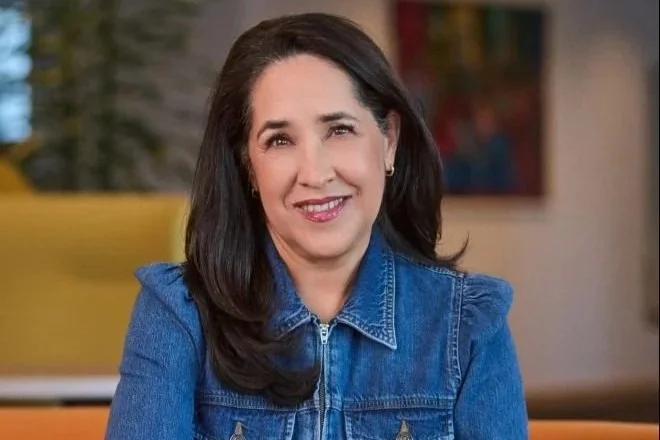
Michelle Chawla, Director and CEO of the Canada Council for the Arts, argues that wider access at home and greater international reach should be priorities for Canadian arts.
Photo credit: Kamara Morozuk, PhotoluxStudio.
On Sept. 17, Canada Council for the Arts Director and CEO Michelle Chawla published an open letter arguing that Canadian arts should be part of the country’s broader conversation about choosing Canadian.
In “Choosing Canadian Arts Means Choosing Canada,” Chawla points to Canadians choosing domestically made goods and services and asks them to consider Canadian literature, music, theatre, dance, visual arts, film and other creative work in similar terms. Her letter sets out two priorities: making Canadian work easier for people across the country to experience, including when cost or geography gets in the way, and increasing the international reach of Canadian artists. Both, she writes, depend on “strong and sustained public investment.”
The letter does not announce a new grant program or attach a dollar figure to that call. Read alongside the Canada Council’s current programs and its new five-year strategic plan, however, Chawla’s version of “choosing Canadian” becomes considerably more specific. It involves whether people can afford to attend an arts event, whether work can reach audiences outside major cities, whether Canadian creators have the money to tour and promote their work, and whether public funding can keep pace with those ambitions.
Affordability is one of the clearest points in the letter. Chawla writes that the country should be asking how to ensure that cost does not stand between people and Canadian arts experiences. A Canadian Heritage survey released with the Canada Council less than two months earlier gives that concern some context. Six in 10 Canadians surveyed said they had attended an arts or cultural performance or event in person during the previous 12 months, and cost was the leading reported barrier to participation. The 2025–26 Arts and Heritage Access and Availability Survey was conducted primarily online with 5,000 Canadians aged 16 and older, with an additional telephone survey of 150 people in the territories.
The Council already funds some of the mechanisms intended to reduce access barriers. Its Public Outreach grants support activities connecting artists with audiences in Canada. An analysis of 525 successful applications made between April 2023 and March 2025 found that recipients proposed free or low-cost access among their accessibility measures. Thirty-six per cent planned to reach underserved communities, while 22 per cent planned work intended to increase access in rural, remote or northern communities.
Geography appears repeatedly in Chawla’s letter. She names large cities, suburbs, small towns, northern communities and rural regions while arguing that Canadians should have opportunities to encounter arts from this country wherever they live. That priority also appears in the Canada Council’s 2026–31 strategic plan, Together with the Arts. Two of its three strategic directions are to “enable stronger connections between the arts and people” and “enhance the benefits of the arts at home and abroad,” while its stated vision is for the arts to thrive “in all parts of Canada and on the world stage.”
In 2024–25, the Council reported $281.6 million in grants and prizes in Canada, supporting 3,037 artists, 392 groups and 1,965 arts organizations. Grants and prizes went to recipients in 685 communities. Arts Across Canada accounted for $31.5 million of the year’s funding.
The other half of Chawla’s argument concerns what happens once Canadian work leaves the country.
She describes arts and culture as part of Canada’s international presence and calls for Canadian artists to have the resources to increase their reach and visibility abroad. The Council already operates several funding streams aimed directly at that work. Its Arts Across Canada and Abroad program, introduced in 2025 by combining the former Arts Across Canada and Arts Abroad programs, includes support for representation and promotion, international translation, circulation and touring, international residencies and international co-productions.
An analysis of 931 successful circulation and touring applications from April 2023 through March 2025 gives a sense of what those grants are intended to produce. Recipients planned more than 5,000 public-engagement activities in Canada, with anticipated participation above 540,000, and nearly 6,000 activities internationally, where anticipated participation exceeded one million. Those figures came from recipients’ grant applications rather than audited attendance totals. Among recipients of the former Arts Abroad grants, 64 per cent said their projects would enhance their international profile.
International promotion of Canadian culture is also receiving federal attention outside the Canada Council. In May, Canadian Heritage announced $95 million over five years beginning in 2026–27, followed by $19 million annually, to make the federal Creative Export Strategy permanent. The strategy serves for-profit and not-for-profit organizations working across sectors including performing arts, audiovisual production, music, publishing, visual arts, design and interactive digital media, using funding, trade missions and other market-development support to help Canadian creative organizations work internationally.
That distinction becomes useful when Chawla’s letter reaches into areas such as film and music. The Canada Council supports media arts, music and other forms of creative practice, but its mandate does not extend to commercial projects in cultural industries including film, television, video games, music and comedy. Those areas also fall under other parts of the federal cultural funding system, while the Council describes its own support as complementary to programs created for commercial cultural industries.
The Council is pursuing this domestic and international agenda while working with a smaller ongoing federal appropriation than it would have had before the federal government’s 2023 spending review. Those reductions were phased in at $3.634 million in 2024–25, $7.325 million in 2025–26 and $9.877 million annually beginning in 2026–27.
Budget 2025 announced an additional $6 million for the Council over three years beginning in 2026–27, and Parliament has since appropriated the first $2 million for the current fiscal year. Chawla wrote in May that most of the new money would be directed to touring and circulation, while acknowledging that the Council was entering the current fiscal year with nearly $10 million less because the earlier reductions had taken full effect. She also said applications were near record levels and the average amount requested had increased with rising costs.
Chawla’s September appeal therefore reaches beyond asking people to buy a Canadian book or attend a Canadian play. She is asking audiences to seek out work from this country while also arguing for sustained public investment to help that work reach them.
Existing Council programs support touring, public outreach, translation and international promotion. Affordability appears in Chawla’s September letter as a priority, although she does not identify a new program or funding mechanism to address it.
Her letter also sets no proposed funding level, no new audience target and no new measure for determining whether Canadians are gaining better access to work produced in this country. Those details will determine how far “choosing Canadian” moves from an appeal into a measurable part of the Council’s 2026–31 agenda.