
Alberta’s book awards spotlight queer history, Indigenous scholarship and independent publishing
The 2026 Alberta Book Publishing Awards offer a snapshot of the range of books being published by Alberta presses — from Edmonton’s queer history to Indigenous scholarship, literary fiction and open-access academic publishing.
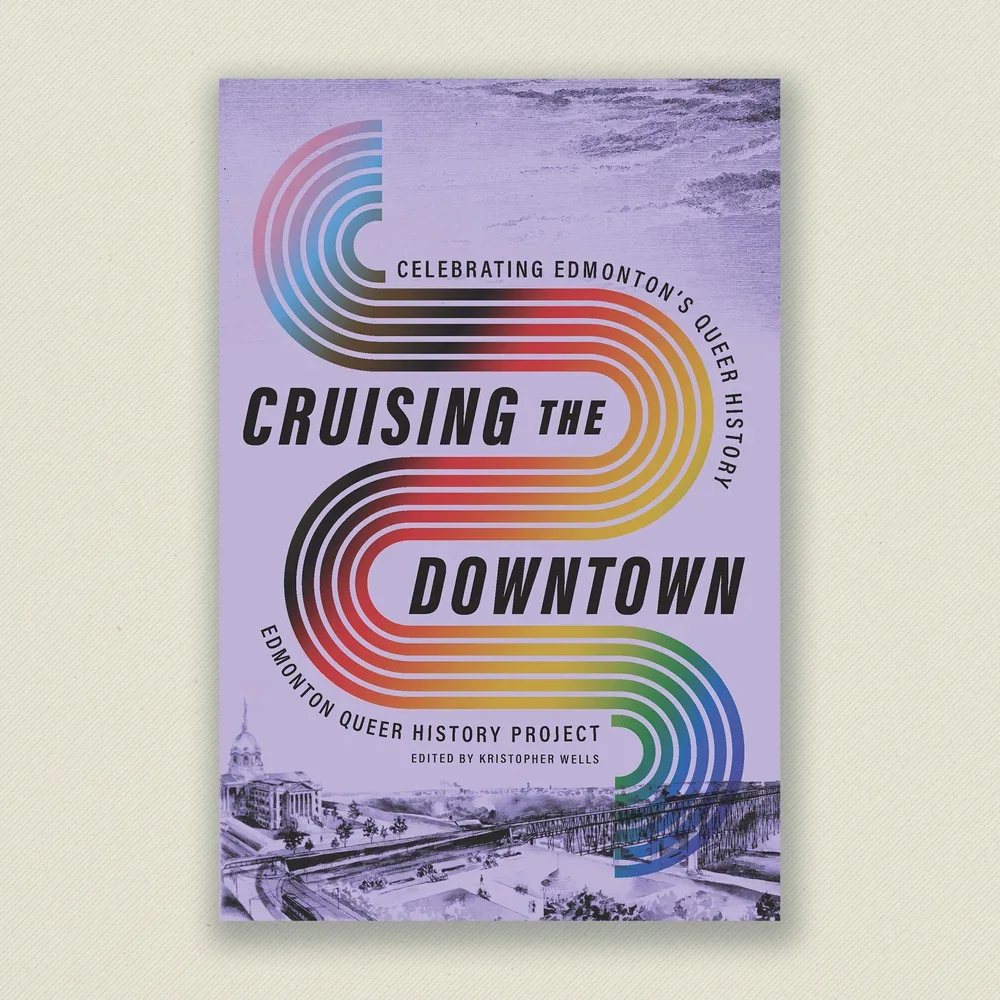
Cruising the Downtown: Celebrating Edmonton’s Queer History, edited by Kristopher Wells, won both Regional Book of the Year and Book Design of the Year at the 2026 Alberta Book Publishing Awards.
Photo credit: NeWest Press
Alberta’s book publishing community gathered in Edmonton on Sept. 17 for the 2026 Alberta Book Publishing Awards, with this year’s winners spanning literary fiction, poetry, children’s books, graphic novels, scholarship, regional history and book design.
The Book Publishers Association of Alberta presented 16 awards at its annual gala, including the Mel Hurtig Publisher of the Year Award and two Lifetime Achievement in Alberta Publishing Awards.
Freehand Books received the Mel Hurtig Publisher of the Year Award. Kathy Killoh of Athabasca University Press and Jean Poulin, founder of Les Éditions Duval, received lifetime achievement honours.
Some of the winning books offer particularly clear examples of the range of work being published in Alberta.
Cruising the Downtown: Celebrating Edmonton’s Queer History, published by NeWest Press, won both Regional Book of the Year and Book Design of the Year. The book was created by the Edmonton Queer History Project and edited by Kristopher Wells. It documents Edmonton’s 2SLGBTQ+ history through its people, places, community spaces, nightlife and activism.
The award recognition came after the book had already appeared repeatedly on Read Alberta’s Alberta bestseller list in 2026. The list is based on national sales data from Bookmanager; Cruising the Downtown appeared among the Alberta bestsellers in March, April, May, June, July and August.
The book’s design was also recognized. Natalie Olsen of Kisscut Design was the designer of the award-winning volume.
Indigenous knowledge and scholarship were also represented in two very different winning books.
Elements of Indigenous Style, 2nd Ed., published by Brush Education, won Learning Book of the Year. The second edition builds on the work of the late Gregory Younging and is edited by Warren Cariou, Deanna Reder, Lorena Sekwan Fontaine and Jordan Abel.
The book addresses practical and ethical questions around publishing Indigenous writing, including editorial relationships, Indigenous identity and community affiliation, Indigenous language and cultural sovereignty, and Two-Spirit, Trans and Indigiqueer contexts.
In the Scholarly & Academic category, Cartographic Poetry: Examining Historic Blackfoot and Gros Ventre Maps won for University of Alberta Press.
Written by Ted Binnema, François Lanoë and Heinz W. Pyszczyk, the book examines five historic maps created by Blackfoot and Gros Ventre people and considers the cultural contexts and knowledge systems reflected in them.
The two books approach Indigenous knowledge from different directions: one focuses on how Indigenous writing is edited and published, while the other examines historical Indigenous maps as expressions of knowledge and understandings of territory.
Freehand Books’ Publisher of the Year honour was accompanied by three category wins. Tim Bowling’s Graveyard Shift at the Lemonade Stand won Trade Fiction; Sharon Butala’s How to Breathe Water won Trade Non-Fiction; and Lauren Carter’s The Longest Night won the Douglas Barbour Award for Speculative Fiction.
Freehand describes itself as an independent Canadian literary publisher and says it became independent in 2016.
Other winners included Skylar Kay’s There’s Magic Here Too: A Trans Woman’s Guide to Being Monstrous, which won the Robert Kroetsch Award for Poetry; Elaine M. Will’s The Last Band on Earth, which won both Graphic Novel and Illustration; and Howdy, I’m Singh Hari by Kelly Kaur, illustrated by Ravina Kaur Toor, which won Children’s & YA.
Renegade Arts Entertainment, Red Barn Books, Frontenac House, Brush Education, NeWest Press and the University of Alberta Press were among the other publishers represented among the winners.
The results also show the range of institutions involved in Alberta publishing, from independent literary houses to university and educational presses.
That range is particularly visible in the lifetime achievement awards.
Killoh was recognized for her contributions to Alberta publishing and her work in open-access scholarly publishing. Athabasca University Press describes itself as Canada’s first open-access scholarly press, founded in 2007, with publications made freely available online.
Poulin was recognized for his contribution to Alberta publishing through Les Éditions Duval. According to the BPAA, Poulin founded Duval House in Edmonton and went on to build a catalogue of more than 600 titles, including French-language educational materials and resources focused on Indigenous languages and cultures.
The awards therefore recognize books, publishers and the people who have helped build Alberta’s publishing infrastructure.
And the winning books cover considerable ground: Edmonton’s queer history sits alongside Indigenous editorial practice and scholarship, while fiction, poetry, children's literature, graphic storytelling and academic publishing all have a place on the list.
The awards are not a census of everything being published in Alberta. They are a selection made through the BPAA’s annual awards process.
But the 2026 results offer a useful view of the range of books and publishing work coming out of Alberta — and of the presses and publishing professionals behind them.


Prince Edward Island filmmaker Jenna MacMillan’s feature directorial debut, The Snake, is making its Canadian premiere as the Atlantic Gala at the Atlantic International Film Festival in Halifax.